





As shoppers look for greener choices without sacrificing convenience or style, sustainable packaging is becoming a key factor in everyday purchasing decisions. The best solutions do more than reduce waste—they also protect products, control costs, and enhance shelf appeal. This article explores practical packaging options that help brands meet consumer expectations while balancing performance, affordability, and visual impact.
Why is sustainable packaging getting so much attention from everyday shoppers?
For many consumers, packaging is no longer an invisible layer that gets discarded after purchase. It now influences how people judge brand values, product quality, and convenience at the point of sale. In categories ranging from food and personal care to office supplies and household goods, sustainable packaging has become part of the product experience itself. Shoppers often want a pack that looks clean and modern, feels responsible, and still keeps the product safe for 6 to 24 months of typical shelf life.
This attention has grown because consumers see packaging waste every day. A bottle, pouch, tray, or shipping box is a visible reminder of how much material is used for a single purchase. At the same time, people do not want to trade away performance. They still expect leak resistance, stackability, print clarity, tamper evidence, and practical opening features. That is why the real conversation around sustainable packaging is not only about reducing material, but about balancing environmental intent with real-world use.
From an industrial intelligence perspective, the most successful packaging choices usually sit at the intersection of 3 priorities: cost control, functional protection, and shelf appeal. If a package looks eco-friendly but fails in transport, return rates rise. If it protects well but doubles unit cost, price-sensitive consumers may walk away. If it is efficient but visually dull, it may lose impact in crowded retail environments where shoppers make decisions in less than 10 seconds.
What are shoppers really looking for?
Most end users are not conducting lab tests on materials, but they notice practical cues quickly. They look for packaging that is easy to recycle, not overly bulky, and still attractive on the shelf or in an online unboxing moment. In many retail settings, especially mass market channels, a difference of even 5% to 15% in package size or material feel can shape whether the product is perceived as premium, wasteful, or efficient.
- Clear disposal guidance, such as recyclable paper, mono-material plastic, or refillable format.
- Visible signs of thoughtful design, including right-sized packs and reduced empty space.
- A package that still communicates quality through graphics, texture, shape, and durability.
These preferences matter across the broader industrial and commercial essentials sector as well. Whether the product is a premium craft item, a hardware accessory, or a household staple, packaging often acts as the final finishing layer of brand perception. In other words, the last stage of presentation can influence the first stage of customer trust.
What counts as sustainable packaging, and which options are most practical today?
Sustainable packaging is best understood as packaging designed to reduce environmental burden without losing its commercial function. That usually means one or more of the following: lower material use, higher recyclability, greater recycled content, renewable feedstock, refill potential, or better transport efficiency. There is no single perfect format for every product. A carton may work well for dry goods, while a mono-material pouch may be more efficient for lightweight flexible applications.
In practice, the most useful options depend on barrier needs, handling conditions, print requirements, and expected shelf display. For example, a premium consumer product may need strong visual impact with matte finishes or tactile coatings, while a fast-moving staple may benefit more from lightweight structures that cut shipping cost by 8% to 20% compared with heavier rigid formats. The smartest choice is often a carefully engineered compromise rather than the most novel material.
The table below compares common sustainable packaging paths that brands and buyers often evaluate when balancing cost, performance, and shelf presence.
The comparison shows that sustainable packaging is not one material category but a decision framework. Paper-based solutions often win on visual communication and consumer familiarity. Flexible formats can reduce logistics cost significantly. Refill systems support long-term waste reduction but require stronger brand commitment. The best packaging strategy starts with product risk level, usage frequency, and the customer’s disposal habits rather than with a single sustainability claim.
Are compostable materials always the best answer?
Not always. Compostable packaging can be valuable in specific applications, especially where food contamination makes recycling difficult. However, many end users do not have access to the right collection systems, and confusion around home versus industrial composting remains common. If the disposal route is unclear, a simpler recyclable format may be more practical and more likely to deliver a real environmental benefit.
That is why brands should focus on fit-for-purpose design. A package that uses 20% less material and enters an existing recycling stream may outperform a technically compostable option that consumers cannot easily process. In sustainable packaging, usability after purchase matters almost as much as material origin before purchase.
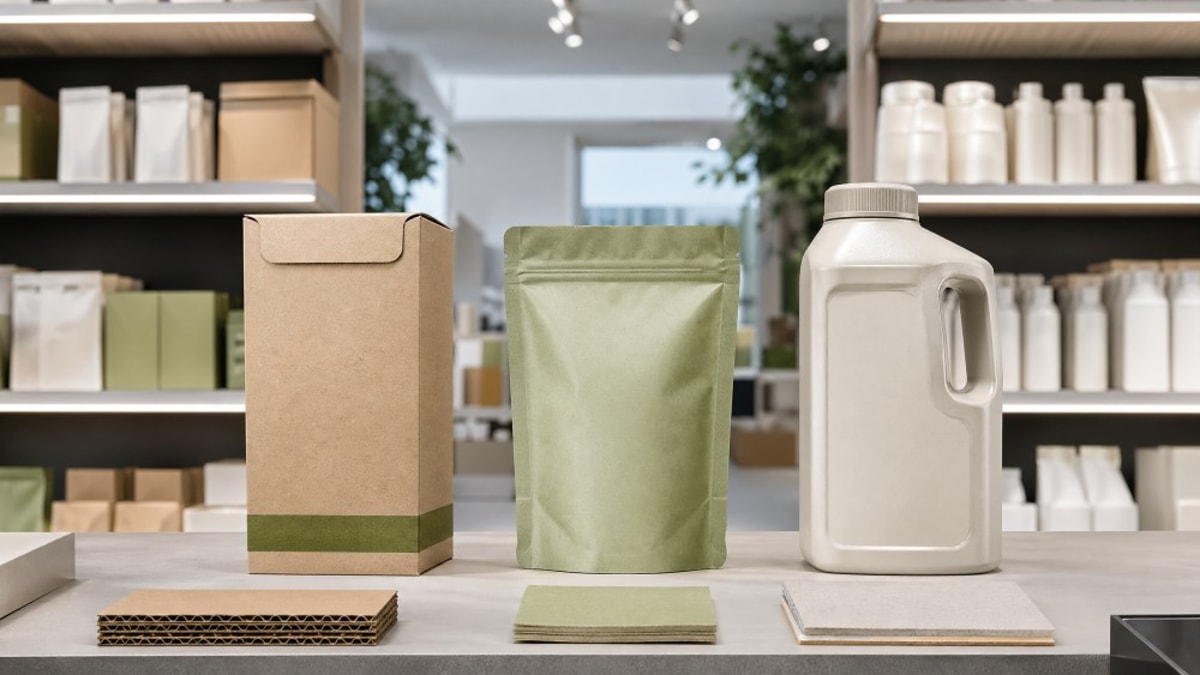
How can brands balance cost, performance, and shelf appeal without overcomplicating the package?
This is the core question behind most packaging decisions. A cost-efficient package that fails during transport will create replacement expense, damaged reputation, and consumer frustration. A visually impressive design that requires too many components can slow packing lines and raise labor costs. A sustainable packaging plan works best when teams evaluate total value, not just material price per unit.
For many products, the right answer lies in reducing unnecessary complexity. Instead of combining 4 to 6 material layers, a brand may shift toward a mono-material structure. Instead of adding a decorative overbox, it may improve direct print quality on the primary pack. Instead of oversized void fill in e-commerce shipments, it may use better-dimensioned corrugated formats. These adjustments can improve both sustainability and cost discipline over a 3- to 12-month packaging review cycle.
Shelf appeal should also be understood correctly. It does not always mean more gloss, more ink, or more structural complexity. In many retail categories, cleaner visual hierarchy, tactile paper finishes, and visible material honesty create a stronger premium feel than excessive decoration. Today’s shoppers often interpret restraint as design confidence.
Which cost levers matter most?
When evaluating sustainable packaging, buyers should look beyond the base material quote. A package with a 7% higher unit price may still reduce total landed cost if it lowers freight weight, improves pallet density, or cuts breakage. Secondary and tertiary packaging also matter. A lighter primary pack can create measurable gains across storage, transport, and fulfillment operations.
- Material efficiency: Can wall thickness, board grade, or pack geometry be optimized without risking damage?
- Packing speed: Does the format support semi-automatic or automatic lines with fewer stoppages per shift?
- Freight impact: Can more units fit per carton, pallet, or container?
- Return and damage rate: Will the package maintain performance through warehousing, shipping, and retail handling?
A practical decision view
In many consumer sectors, the best results come from ranking packaging objectives in order. If product protection is non-negotiable, barrier and durability stay first. If the item is low-risk and high-volume, logistics efficiency may take priority. If the product relies on gifting or premium positioning, visual finish and tactile quality may deserve more budget. Sustainable packaging is most effective when these priorities are defined before suppliers start proposing materials.
How do you compare sustainable packaging materials in a realistic way?
A realistic comparison should test materials across the full purchase journey: filling, sealing, transport, shelf display, opening, use, and disposal. Consumers may never see a technical specification, but they will notice if a pouch tears badly, a carton dents too easily, or a refill container leaks. For that reason, practical material evaluation should combine performance criteria with user perception and disposal simplicity.
It also helps to compare options using a short list of measurable factors. Typical review points include barrier needs, compression resistance, print performance, material compatibility, lead time, and disposal clarity. Depending on order volume and complexity, a packaging validation process may take 2 to 8 weeks for samples and another 2 to 6 weeks for line trials and transit checks.
The table below offers a simplified material comparison that can guide first-stage screening for sustainable packaging across consumer-facing products.
The table makes one point clear: no packaging material wins in every category. Paper often supports premium storytelling, mono-material plastics can be highly efficient, and refill formats can build loyalty. The right choice depends on whether the product is bought once, used repeatedly, shipped long distances, or displayed in a competitive aisle. Comparing sustainable packaging realistically means testing use case before image.
What should consumers and buyers ask suppliers?
A good supplier discussion should move quickly from claims to specifics. Instead of asking whether a package is simply sustainable, ask how it performs, how it is disposed of, and where cost changes come from. In many procurement decisions, these details reveal whether a concept is commercially sound or only attractive in presentation slides.
- What product protection level does the structure provide under normal transport and storage conditions?
- What is the expected lead time for samples, pilot runs, and mass production?
- Can the format be produced consistently at the target order volume, such as 10,000, 50,000, or 100,000 units?
- Are disposal instructions simple enough for end users in the intended markets?
What are the most common mistakes people make when choosing sustainable packaging?
One frequent mistake is focusing on a single claim while ignoring the whole packaging system. A package may contain recycled content, but if it requires heavy secondary protection because it lacks stiffness, the total material use may not improve. Another mistake is assuming consumers will forgive poor convenience because the package is greener. In reality, difficult opening, messy pouring, weak reseal performance, or awkward storage can quickly reduce repeat purchase intent.
A second mistake is underestimating how much shelf appeal still matters. Sustainable packaging does not need to look plain or unfinished. In fact, subtle design quality often becomes more important when a brand uses fewer decorative elements. Color contrast, typography, embossed details, and tactile substrates can create strong presence without excessive material layers. In retail environments where products compete side by side, visual clarity remains a key selling tool.
The third mistake is skipping operational reality. Some structures look excellent in concept but create line inefficiencies, sealing variability, or high scrap rates during production. Even a 2% to 4% increase in reject rate can materially affect packaging economics over a full production cycle. That is why early collaboration between design, engineering, sourcing, and fulfillment teams matters.
Quick FAQ judgment table
The following quick-reference table helps translate common consumer and buyer questions into better decision criteria for sustainable packaging.
This kind of structured evaluation helps prevent decision-making based on assumptions. It also aligns packaging selection with real consumer behavior, which is especially important in broad commercial sectors where products must perform across multiple regions, sales channels, and price points.
If a brand wants to move forward, what should be confirmed first?
Before changing packaging, brands should define the practical brief. That means identifying the product’s sensitivity, target channel, expected order volume, desired shelf life, and required look and feel. A sustainable packaging concept for a direct-to-consumer refill pouch will differ greatly from one for a retail gift carton or a protective insert for commercial hardware essentials. Clarity at this stage can save several rounds of redesign.
It is also important to confirm what “success” means. Is the goal to reduce plastic content by a certain range, improve pallet efficiency, raise premium perception, or support easier recycling? Setting 2 to 4 measurable priorities helps guide trade-offs. For example, if shelf appeal and transport efficiency are both critical, the solution may involve a hybrid approach such as a right-sized printed carton paired with a lighter internal support structure.
Finally, plan for testing rather than assumptions. Even simple validation steps such as seal checks, drop tests, humidity exposure review, and consumer opening trials can reveal whether a design is truly ready. In many categories, a 30- to 60-day review period is enough to compare two or three candidate formats before scaling up.
Why choose us for sustainable packaging guidance?
At GIFE, we view packaging as part of the final stage of value creation, where aesthetics, materials, and industrial practicality must work together. Our cross-functional perspective combines market intelligence, industrial finishing insight, and sustainable packaging thinking to help businesses assess what is realistic, scalable, and commercially effective. That is especially useful when brands need more than a generic eco claim and want packaging decisions tied to performance and consumer response.
If you are reviewing sustainable packaging for consumer-facing products, we can help you organize the key questions before sourcing or redesign begins. This may include confirming material direction, comparing format options, reviewing likely cost drivers, understanding lead-time ranges, and identifying where shelf appeal can be strengthened without unnecessary packaging complexity.
Contact us if you would like to discuss parameter confirmation, packaging selection, delivery timing, custom concept direction, sample support, disposal communication, or quotation planning. A focused conversation at the start can make it much easier to choose sustainable packaging that protects the product, respects the budget, and still earns attention on the shelf.
Related News
- 00
0000-00
Electromechanical Engineers Consulting for Faster System Integration - 00
0000-00
Sustainable Packaging Solutions: What Works at Scale and What Fails - 00
0000-00
Global Value Chain Management Mistakes That Raise Export Risk - 00
0000-00
Industrial Finishing Technology Trends to Watch in 2026 - 00
0000-00
Industrial Production Efficiency Fixes That Do Not Require New Lines
Weekly Insights
Stay ahead with our curated technology reports delivered every Monday.