
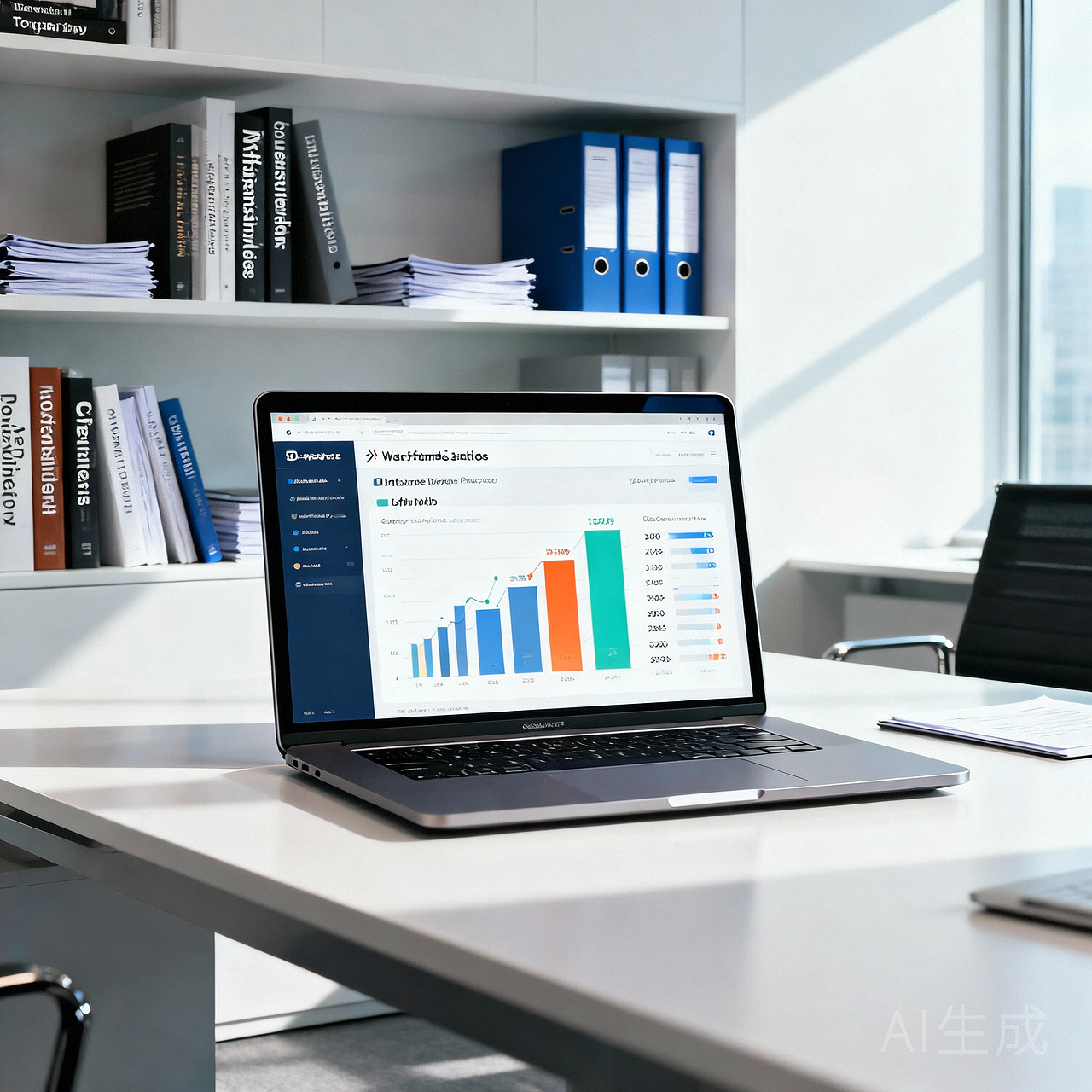




For business evaluators, timing can determine whether a market entry becomes a growth engine or a costly misstep. A strategic intelligence report helps turn scattered signals—trade policy shifts, demand trends, cost pressures, and technology changes—into actionable timing decisions. By aligning data with competitive context, companies can enter new markets with greater confidence, lower risk, and stronger positioning from the very start.
When companies discuss market entry, the conversation often centers on where to expand and how to compete. Yet for many evaluation teams, the more decisive question is when to move. Enter too early and the market may not be ready. Enter too late and margins, distributor attention, and brand differentiation may already be under pressure. This is where a strategic intelligence report becomes far more than a background document. It becomes a timing tool.
For business evaluators responsible for screening opportunities, validating assumptions, and reducing commercial risk, the value of such a report lies in its ability to connect fragmented market information into a usable decision framework. Instead of relying on intuition or isolated statistics, decision-makers gain a structured view of demand readiness, competitive movement, regulatory direction, supply-side feasibility, and profitability windows.
What business evaluators really need from market entry timing analysis
Most target readers searching for this topic are not looking for a textbook definition of intelligence reporting. They want to know whether a report can help them make a better go-or-wait decision. They need evidence, not theory. Specifically, they need to judge whether current conditions support immediate entry, phased entry, pilot entry, or postponement.
That means the most useful analysis is not broad market commentary. It is insight that clarifies timing-sensitive questions: Is demand accelerating or only temporarily inflated? Are policy changes creating a short-term opening or a long-term structural shift? Are incumbent competitors vulnerable right now? Will input costs improve or deteriorate over the next two to four quarters?
A good strategic intelligence report supports these decisions by filtering market noise and highlighting the signals that actually affect commercial timing. For business evaluators, that translates into clearer investment logic, stronger internal recommendations, and better alignment between expansion ambition and operational readiness.
Why timing is often the hidden variable in market entry success
Many market entry failures are not caused by a poor product or weak market selection. They happen because the entry was mistimed. A company may launch into a promising market just before regulatory tightening, cost escalation, channel saturation, or demand normalization. On paper, the opportunity looked attractive. In reality, the timing window had already narrowed.
In industrial and commercial sectors, timing is especially sensitive because markets respond to interconnected forces. Trade tariffs can shift sourcing patterns. Sustainability quotas can reshape packaging demand. Electromechanical efficiency standards can accelerate replacement cycles. Aesthetic trends can suddenly affect finishing requirements in furniture, office products, and consumer-facing industrial goods.
Without a structured intelligence process, these changes are easy to underestimate. Business evaluators may see positive demand data and miss deteriorating import conditions. They may focus on market size while overlooking competitor inventory pressure or downstream margin compression. Timing errors usually come from incomplete context, not from a complete lack of information.
A strategic intelligence report reduces this risk by linking external changes to entry consequences. It asks not only what is changing, but whether that change improves or weakens the business case for entering now.
What a strategic intelligence report should include to support better timing decisions
Not every market research document qualifies as a strategic intelligence report. If the goal is better market entry timing, the report must move beyond static descriptions and provide decision-oriented interpretation. Business evaluators should expect several core layers of analysis.
First, the report should map current and near-term demand. This includes volume trends, segment-level growth, buyer behavior shifts, premiumization signals, procurement cycles, and replacement patterns. In sectors linked to industrial finishing, hardware, packaging, and commercial essentials, timing often depends on whether demand growth is broad-based, project-driven, or concentrated in temporary hotspots.
Second, it should evaluate the regulatory and trade environment. Market entry timing can change rapidly when tariffs, environmental standards, local content rules, energy efficiency requirements, or packaging compliance obligations shift. A report that tracks these factors helps evaluators identify whether a market is opening, stabilizing, or becoming more expensive to access.
Third, the report should assess the competitive landscape with a timing lens. It is not enough to know who the competitors are. Evaluators need to understand whether incumbents are investing, consolidating, discounting, losing channel power, or struggling to adapt to new standards. A market may be crowded, but still highly attractive if dominant players are slow to respond to structural change.
Fourth, cost and supply-side intelligence is essential. Entry timing depends on sourcing reliability, logistics costs, labor trends, component availability, and production flexibility. If a company enters while freight, energy, or compliance costs are peaking, profitability can erode before scale is achieved.
Finally, a strong report should translate all findings into scenario-based recommendations. Instead of ending with general optimism or caution, it should define what conditions support immediate entry, what signals justify waiting, and what indicators should trigger re-evaluation.
How strategic intelligence turns scattered signals into actionable timing insight
The main advantage of a strategic intelligence report is synthesis. Most companies already have access to data, but data alone rarely resolves timing questions. The difficulty lies in interpreting conflicting signals. Demand may be growing, but profit pools may be shrinking. Regulation may be stricter, but that same shift may eliminate low-cost competitors. Technology adoption may be uneven, yet early entry may secure premium positioning.
Strategic intelligence helps by building relationships between signals. For example, a rise in sustainability regulation should not be read only as a compliance burden. In some markets, it creates an opening for firms with stronger eco-material capabilities or de-plasticized packaging solutions. Likewise, changes in office and furniture demand should not be measured only in unit sales, but also in evolving expectations around smart hardware integration, finishing quality, and component durability.
This is particularly relevant for organizations operating across industrial finishing and commercial essentials, where small design, material, or performance shifts can alter competitive value. A business evaluator does not simply need to know that a market is growing. They need to know whether the company’s capabilities are becoming more relevant within that growth cycle.
That is why the best intelligence reports connect macro developments to capability fit. They reveal whether the company is entering a market at a moment when its strengths are most likely to command attention, margin, and long-term account value.
Key questions business evaluators should ask before recommending entry
To use a strategic intelligence report effectively, evaluators should frame their review around a set of timing-focused questions. These questions help prevent expansion decisions from becoming overly influenced by headline growth numbers or internal pressure to act quickly.
Is demand durable enough to support entry now? Evaluators should distinguish between cyclical spikes, temporary procurement shifts, and sustainable structural growth. A market that appears attractive in one quarter may be normalizing by the time operations scale.
Are policy and compliance changes helping or hurting the entry case? New environmental quotas, tariff shifts, or product standards may create barriers, but they may also favor higher-specification suppliers. Timing depends on whether the company can convert compliance readiness into commercial advantage.
What are competitors likely to do next? If incumbents are heavily discounting to defend share, waiting may be wise. If they are slow to adapt to smart, sustainable, or premium finishing trends, earlier entry may create a stronger strategic position.
Can the supply chain support profitable market access? Even a promising market can become a poor timing choice if logistics, lead times, or key components remain unstable. Entry should align with operational readiness, not just market attractiveness.
Is there a clear window for differentiation? In many industrial categories, timing matters most when customer evaluation criteria are changing. If buyers are rethinking material sustainability, finishing aesthetics, hardware intelligence, or energy efficiency, new entrants may gain more attention than they would in a stable market.
Common signs that now may be the right time to enter
While every market is different, a strategic intelligence report often reveals patterns that indicate favorable timing. One strong sign is the convergence of demand growth and standards change. When customer demand rises at the same time that regulations or buyer expectations shift, incumbent suppliers may struggle to respond quickly. This creates space for prepared entrants.
Another sign is channel dissatisfaction. If distributors, OEMs, or procurement teams are actively searching for alternatives due to cost inflation, inconsistency, quality issues, or outdated product specifications, timing may be better than broad market concentration suggests.
Evaluator teams should also watch for capability-premium alignment. For example, if the market begins rewarding sustainable packaging, refined finishing quality, or more efficient electromechanical components, companies already positioned in those areas can enter with greater confidence.
Improving trade conditions, stabilizing input costs, and policy clarity are additional indicators. Markets do not need to be perfect to justify entry, but the direction of movement matters. A market becoming more transparent, more standards-driven, and more quality-sensitive often offers better entry timing than a market growing fast but becoming less predictable.
Warning signals that suggest waiting may create more value
A strategic intelligence report is equally valuable when it advises restraint. Delaying entry is not a failure if the evidence shows the timing is weak. One common warning sign is demand distortion caused by short-term events, such as stockpiling, temporary incentives, or one-off project cycles. Entering based on inflated demand can lock the business into unrealistic expectations.
Another concern is unresolved regulatory uncertainty. If environmental obligations, import rules, or certification requirements are still evolving, early entry may expose the company to redesign costs, pricing pressure, or delayed approvals.
Competitive instability can also be a warning sign. When major players are engaged in aggressive price defense or channel conflict, new entrants may find that projected margins disappear quickly. Similarly, if buyers remain highly price-driven and show limited interest in quality, sustainability, or technical differentiation, waiting for the market to mature may produce better returns.
Supply fragility is another timing risk. If key components, finishing materials, packaging inputs, or logistics routes remain volatile, the business may enter a market it cannot serve consistently. For evaluators, this is a critical reminder that market readiness and company readiness must be assessed together.
How to use the report in an internal decision process
A strategic intelligence report creates the most value when it is integrated into a clear evaluation workflow. First, business evaluators should define the decision scope. Is the company assessing full entry, distributor partnership, pilot export, localized assembly, or strategic monitoring? Timing recommendations depend on the scale and form of entry under consideration.
Next, the report should be translated into a decision matrix. Key dimensions may include demand momentum, regulatory favorability, competitive pressure, margin outlook, supply feasibility, and differentiation fit. Each dimension should be scored not only for attractiveness, but also for timing urgency.
From there, evaluators can build scenarios: enter now, enter in six to twelve months, conduct a pilot first, or postpone and monitor. This helps leadership compare options in commercial terms rather than abstract market narratives. It also makes assumptions visible, which improves alignment across strategy, sales, operations, and finance teams.
Finally, the report should support ongoing monitoring. Market entry timing is not a one-time conclusion. A useful intelligence process identifies leading indicators that should be revisited regularly, such as tariff revisions, channel shifts, buyer qualification cycles, sustainability mandates, and component cost trends.
Why this matters in industrial finishing and commercial essentials
In sectors connected to industrial finishing, hardware, packaging, and commercial essentials, timing is often shaped by details that broader market reports overlook. Surface treatment requirements, aesthetic finishing trends, eco-material adoption, energy-efficiency standards, and component integration can all influence whether a market is ready for a higher-value offer.
This is where specialized intelligence becomes especially useful. A general market overview may show growth in furniture, office products, packaging, or electromechanical demand. But a more strategic report can reveal whether buyers are moving toward premium finishes, low-energy specifications, de-plasticized formats, or smarter integrated hardware. Those shifts often determine the true timing window for differentiated entry.
For business evaluators, this level of precision matters because it improves both risk control and opportunity capture. It helps companies avoid entering on outdated assumptions and instead align expansion with where technical relevance, commercial demand, and regulatory direction are beginning to intersect.
Conclusion: better timing comes from better intelligence, not faster decisions
A market entry decision should not be rushed simply because a market looks attractive at a high level. For business evaluators, the real task is to determine whether the current moment offers the right balance of demand readiness, competitive opportunity, operational feasibility, and margin potential. A strategic intelligence report supports that task by turning fragmented information into timing logic.
Its value is practical. It helps companies identify whether they should enter now, prepare for later, test the market in stages, or wait for clearer conditions. It reduces the risk of acting on incomplete signals and improves the quality of internal recommendations.
In a business environment shaped by shifting trade rules, sustainability pressures, evolving buyer expectations, and fast-moving technology standards, timing is no longer a secondary issue. It is a core part of market entry strategy. Companies that use strategic intelligence well are not simply better informed. They are better positioned to move at the moment when opportunity is most real and risk is most manageable.
Related News
- 00
0000-00
AI Server & Edge Computing Module Export Potential Rises - 00
0000-00
Liquid Metal Tendering Rises in Coastal Provinces - 00
0000-00
MIIT-Led 'AI+Manufacturing' Action Plan Prioritizes Biomanufacturing - 00
0000-00
Q1 Marine Economy Grows 5.4%; Offshore Wind Equipment Export Orders Accelerate - 00
0000-00
China Launches 3-Year Campaign Against Illegal Financial Activities
Weekly Insights
Stay ahead with our curated technology reports delivered every Monday.