





India has introduced a rule requiring steel used in certain products for public procurement to be melted and cast into its first solid form within the country, with final manufacturing also completed domestically. The event date is not specified in the information provided. Covering items from railway materials and structural steel to wire products and fasteners, the rule gives suppliers, manufacturers and project buyers a reason to examine both steel origin and production location when assessing access to government-related orders.
Domestic production requirements span steel and finished goods
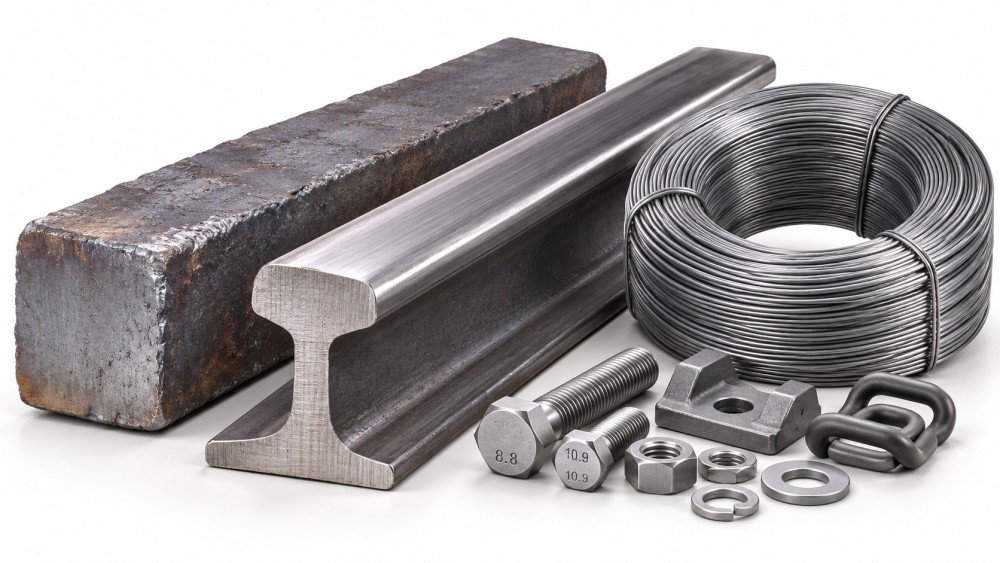
The new rule applies to railway materials, structural steel, steel wire products, fasteners and other steel products within the procurement scope of government agencies, state-owned enterprises and government-funded projects. The steel used in those products must be melted in India and cast there into its first solid form. The final products must also be manufactured entirely in India.
The information provided does not specify when the event occurred. It does not identify a policy number, publication date or official source link, and it does not set out detailed procedures for demonstrating compliance.
Where procurement decisions could change
Steel origin becomes central to product eligibility
Analysis suggests that the rule could make the origin and early production history of steel a central consideration for businesses seeking the covered public orders. A product made in India with imported steel may face a different eligibility assessment from one made with steel that was melted and cast into its first solid form in India. Conversely, domestic steel alone would not address the separate requirement that final manufacturing take place entirely within India.
For manufacturers of fasteners, wire products and structural components, this distinction could affect raw-material selection before a bid is submitted. Businesses may need to examine whether their existing purchasing records connect the steel in a finished product to its production history. The information provided does not establish which documents buyers will accept, so the practical evidence requirements remain a point for verification.
Imported finished products face a narrower route to covered orders
From a trade perspective, the stated manufacturing requirement is expected to limit the participation of imported finished steel products in the covered public procurement market. Exporters and distributors may therefore need to distinguish between opportunities involving government-related procurement and other sales, for which the input does not describe any change in requirements.
Analysis also suggests that a local processing step alone may not resolve every eligibility question. Suppliers would need to consider both where the steel was melted and first cast into solid form and where the final product was manufactured. The precise treatment of particular production routes, product categories and procurement arrangements would depend on details not supplied in the event summary.
Buyers and contractors may need clearer supply-chain information
Government-related buyers, project contractors and businesses supplying them could face more questions about the origin of materials used in an order. In practice, a procurement team may need information from several parties: the steel supplier, any intermediate processor and the manufacturer of the finished product. Analysis suggests that gaps between these records could complicate a bid or delivery review, even where a supplier believes its product meets the stated conditions.
For contractors responsible for multiple steel product categories, the assessment may need to be made separately for each proposed item and its supply route. A compliant source for one component would not by itself establish the production history of every other component in a project. The level of documentation and the point at which it must be supplied remain unspecified in the information provided.
Demand could shift toward domestic steel suppliers
The event summary expects the rule to push demand toward Indian steel producers. From an industry perspective, that outcome is plausible if buyers replace imported steel or finished products with eligible domestic alternatives for covered orders. The extent and timing of any shift remain uncertain, as the available information does not quantify affected procurement or describe how individual buyers will apply the rule.
Manufacturers considering a change of source may also need to assess whether an alternative can meet the product specifications and delivery needs of a particular order. That is a practical procurement consideration, not a separate technical requirement established by the information provided.
What suppliers can check before the next bid
Map the product route from steel to finished item
A useful first step may be to identify which products a business offers for government agencies, state-owned enterprises or government-funded projects, and then trace the production route for each item. For a fastener, for example, the review could cover the source of the steel, where it was melted and cast into its first solid form, and where the finished fastener was manufactured.
This mapping is an assessment tool rather than a prescribed compliance procedure. It can help a supplier identify questions that need to be put to upstream partners before making an eligibility claim. Where a product passes through several processors, the business may also need to understand how those stages relate to the requirement for complete domestic manufacturing; the event summary does not resolve that question.
Review records and ask buyers what evidence they require
Suppliers may wish to review the records they already hold for raw-material purchases, production and delivery, and ask whether those records can support the origin and manufacturing statements relevant to a specific bid. They can also seek clarification from the buyer on the evidence requested in the applicable procurement documents.
No certification scheme, test report or particular document is identified in the supplied information. Companies should therefore avoid assuming that a familiar certificate or a single supplier declaration will necessarily be sufficient. Equally, the absence of a named certification procedure in the summary does not establish that none will be requested in a particular procurement.
Test alternatives against the order and its schedule
If an existing supply route relies on imported steel or an imported finished product, a business could assess whether an Indian-produced alternative is available for the intended order. That review may include product specifications, supplier capacity, commercial terms and the time needed to obtain and verify material. Any proposed substitution should be checked against the buyer's requirements before it is presented as suitable.
Analysis suggests that changing suppliers could affect lead times or purchasing plans, but the supplied information does not establish that delays or shortages have occurred. Procurement teams can reduce uncertainty by discussing possible alternatives and documentation needs early, while keeping delivery commitments tied to verified supply arrangements.
Check the tender and subsequent official guidance
Businesses should compare the stated rule with the relevant tender documents and any official material available for the procurement they intend to pursue. Points worth checking include product scope, how the production conditions are described, what evidence is requested and how a buyer will assess a proposed supply route.
The event summary does not specify an effective date, transition arrangements, exemptions or a verification process. Those matters should not be assumed. Later official guidance and individual procurement documents may clarify them, and suppliers can update their assessments when authoritative information becomes available.
A stated rule with practical details still to verify
The information provided describes a new rule, so the development is more than a general signal of interest in domestic sourcing. At the same time, the absence of an event date, an official source link and detailed execution provisions limits what can be concluded about its application to a particular order. At this stage, it is most appropriate to treat the domestic steelmaking and manufacturing conditions as the stated rule change while continuing to verify how they will be applied.
Several details could materially affect business decisions: the wording of covered product descriptions, the evidence accepted for steel origin, the treatment of multistage manufacturing and the instructions included in tender documents. Industry feedback may also help reveal practical questions, although it would not replace official requirements or the terms of an individual procurement.
Analysis suggests that the rule could make supplier traceability more commercially relevant across the covered supply chain. Whether that results in a substantial change in sourcing patterns will depend on procurement activity, available supply and implementation details that are not established in the input.
Assess eligibility at the level of each order
India's stated approach links access to covered public procurement with two production conditions: domestic melting and first casting of the steel, and complete domestic manufacture of the final product. For businesses supplying railway materials, structural steel, wire products, fasteners and other steel products, the immediate analytical task is to compare each proposed supply route with those conditions.
The expected restriction on imported finished goods and products made with imported steel could redirect some demand toward domestic steel producers. Its practical effect remains to be observed. A measured response is to prepare product and supply-chain information, review the relevant procurement documents and verify unresolved details before relying on an assumed outcome.
Basis for this report and points to verify
This article is based on the user-provided news title, event-time information and event summary. No specific official source link was provided in the input, and the underlying rule and its execution details still require continuing verification.
Relevant materials for further checking may include official announcements, regulatory publications, procurement documents, trade authority information, industry association updates and authoritative media reports. Subsequent review should focus on policy details, any certification or evidence requirements, changes in tender wording, trade and procurement practice, and feedback from affected businesses.
Contact Us
Got questions about global market dynamics or seeking best practices for your expansion strategy? Drop us a line below, and let the experts at Global Market Feed help you out.
“We respect your privacy. Your information is strictly confidential.”
Related News
- 00
0000-00
International Paper Executive Sees Tough 2027 as US Containerboard Supply Stays Tight - 00
0000-00
How to assess an industrial finishing materials supplier’s consistency - 00
0000-00
AF&PA October Report: Packaging Paper Shipments Flat, Bleached Operating Rate Falls - 00
0000-00
What drives the cost of de-plasticization in packaging? - 00
0000-00
How to choose the right wedge anchor size for concrete
Weekly Insights
Stay ahead with our curated technology reports delivered every Monday.