





Thermal printing looks simple when a receipt, label, ticket, or logistics document comes out cleanly, but small material mismatches can quickly create fading, unclear barcodes, printer jams, customer complaints, and waste. For buyers sourcing Thermal Paper, the real challenge is not only choosing roll size and price; it is controlling coating quality, printer compatibility, storage conditions, image durability, packaging, and supplier consistency.
This problem-solving guide is written for distributors, retailers, logistics teams, supermarkets, restaurants, pharmacies, office supply buyers, label converters, warehouse operators, and procurement teams that purchase thermal paper rolls or label thermal paper for daily operations. Thermal paper is a consumable product, but it directly affects checkout speed, barcode scanning, delivery accuracy, customer recordkeeping, and equipment uptime. A low-quality roll can create hidden costs that are much larger than the small saving on the purchase order. The best buying process starts with identifying common failure points and then building a specification that prevents them.
Problem 1: Printed Text or Barcodes Fade Too Quickly
Fading is one of the most common complaints in thermal paper use. Receipts may become unreadable, labels may lose barcode clarity, or records may fail to remain legible for the required period. The cause is often linked to coating formulation, heat sensitivity, storage conditions, exposure to light, contact with plasticizers, oil, alcohol, adhesive, or high temperature. Thermal images are created by heat reaction rather than ink, so the printed result depends on both paper quality and how the document is handled after printing.
Buyers should first define how long the print needs to remain readable. A short-life food delivery receipt, a retail receipt, a pharmacy label, a warehouse barcode, and a transport ticket may have different durability expectations. If printed information needs to be kept for accounting, warranty, logistics, or compliance purposes, the buyer should request suitable image stability and storage guidance. It is risky to assume that all rolls with the same width and diameter will provide the same print life.
Storage discipline is also essential. Printed thermal documents should be kept away from high heat, direct sunlight, strong light exposure, oils, solvents, PVC materials, and friction where possible. If the buyer's operating environment is difficult, that condition should be discussed before ordering. A stronger product specification may be needed for transport labels, outdoor logistics, or long-term recordkeeping.
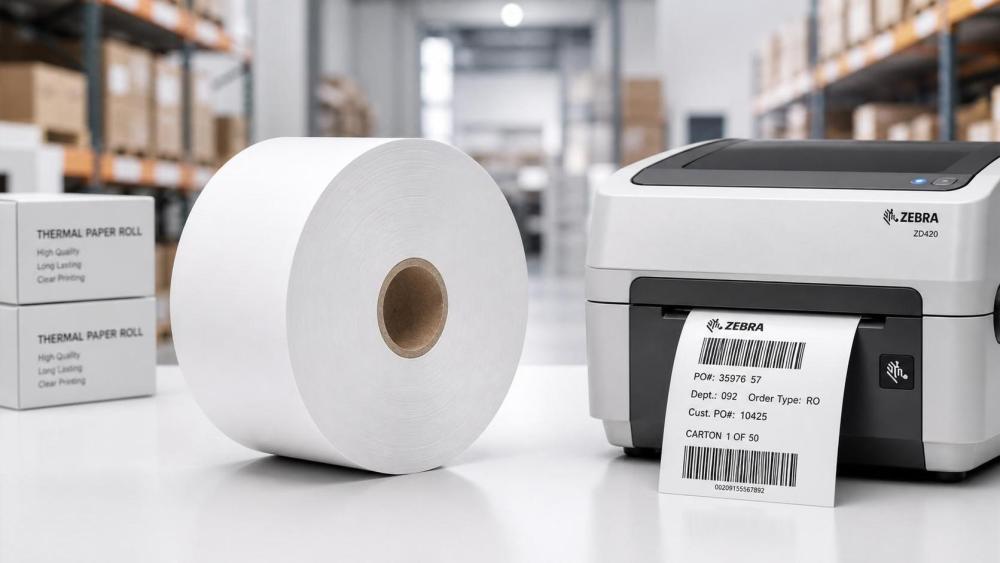
Problem 2: Printing Is Too Light, Patchy, or Uneven
Light or uneven printing can come from several sources. The thermal coating may have inconsistent sensitivity, the paper surface may be uneven, the printer head may be dirty, the printer heat setting may not match the paper, or the roll may have absorbed moisture during storage. Buyers often blame the printer first, while printer operators blame the paper. In many cases, the problem is a combination of material, machine setting, and maintenance.
Procurement teams can reduce this risk by testing paper on the actual printer models used in the business. A roll that prints well on one device may not perform identically on another if heat output, speed, pressure, and printer head condition differ. For barcode or QR code printing, image contrast matters even more because scanning reliability depends on clean edges and sufficient darkness. Buyers should test sample rolls with real transaction data, labels, or ticket formats rather than only printing a short text line.
Printer maintenance should be included in the problem-solving process. Dust, adhesive residue, paper particles, and worn printer heads can reduce image clarity even when paper quality is acceptable. A practical purchasing program should coordinate paper specification with printer cleaning routines, operator training, and storage control.
Problem 3: Printer Jams and Roll Feeding Issues
Printer jams are often caused by details that seem minor during purchasing. Roll width, outside diameter, core size, winding direction, winding tightness, edge quality, paper stiffness, and dust level can all affect feeding. If a roll is too large for the printer compartment, it may rub or fail to rotate smoothly. If the core size is wrong, the roll may sit incorrectly. If the roll is wound too tightly or unevenly, feeding tension can change during printing.
Buyers should list the exact printer models and roll specifications before placing a large order. This includes width, length or roll diameter, core inner diameter, paper grammage where relevant, and whether the roll is intended for receipt printing, label printing, ticketing, or another application. For label thermal paper, adhesive, liner, label size, gap, black mark, and die-cutting accuracy may also matter. A general product name is not enough.
Packaging can also affect jam risk. Damaged carton corners, crushed rolls, moisture exposure, and loose packing can deform the roll before it reaches the printer. Export buyers should pay attention to carton strength, palletizing, wrapping, and storage instructions. A roll that leaves the factory correctly can still fail if transport and storage conditions are poor.
Problem 4: Barcode and Label Scanning Failures
Barcode reliability is critical in logistics, warehousing, healthcare, retail, and inventory control. A label may look readable to the human eye but still scan poorly if contrast is weak, edges are fuzzy, or the printed surface is damaged. Thermal label buyers should test barcode quality using real scanners, real label sizes, and real application surfaces. Testing should include normal operating speed, storage conditions, and the expected handling process.
Label applications may need additional checks beyond ordinary receipt paper. Adhesive performance, liner release, label curl, face stock thickness, die-cut accuracy, and resistance to handling can affect final performance. If labels are applied to cartons, bottles, plastic bags, cold surfaces, or curved packaging, the buyer should confirm adhesive suitability. If labels face friction, humidity, or temperature changes, the image and adhesive need to be evaluated together.
For logistics labels, the failure cost can be high. A lost barcode can delay shipments, create sorting errors, or force manual handling. Buyers should treat label thermal paper as part of the operating system, not a simple commodity. The right product should support scanning reliability throughout the required handling period.
Problem 5: Poor Storage and Inventory Control
Thermal paper is sensitive to environment. Heat, sunlight, moisture, pressure, chemicals, and unsuitable packaging materials can affect paper and printed images. Buyers who purchase large quantities should plan inventory turnover and storage conditions. Rolls should usually be kept in clean, dry, moderate conditions, away from direct heat and chemical exposure. Cartons should be protected from crushing and moisture.
Inventory planning should reflect usage speed. Buying too much at once may reduce unit cost but increase storage risk if the paper sits for too long or if warehouse conditions are not controlled. Buying too little may create urgent replenishment and inconsistent batch sourcing. A better approach is to classify fast-moving roll sizes separately from special sizes, label formats, or customer-specific products.
Batch tracking is useful for repeat buyers. If a print issue appears, batch records help identify whether the problem is limited to one delivery, one roll size, one printer line, or one storage location. Without tracking, buyers may blame the entire supplier relationship when the problem is actually local handling or printer maintenance.
Problem 6: Comparing Suppliers Only by Price
Thermal paper is often purchased in competitive markets, so price pressure is real. But price-only sourcing can create operational problems. A cheaper roll may have shorter length, lower sensitivity, weaker packaging, more dust, inconsistent winding, or less reliable image stability. If the roll creates jams or unreadable labels, the true cost includes labor, downtime, reprinting, customer complaints, and lost productivity.
Buyers should compare suppliers using a consistent specification. The inquiry should include roll width, diameter or length, core size, grammage, coating side, image stability expectation, printer model, packing requirement, carton quantity, label size where relevant, and document needs. When all suppliers quote the same scope, price comparison becomes more meaningful.
Supplier evaluation should include sample testing, batch consistency, packaging quality, communication, complaint handling, and delivery reliability. For businesses that use thermal paper every day, stable supply is part of operational continuity. A supplier who can maintain consistent quality may be more valuable than one who offers a temporary low price.
Practical Procurement Checklist
- Confirm the application: receipt, label, ticket, logistics barcode, pharmacy label, or office printing use.
- Specify roll width, roll diameter or length, core size, grammage, winding direction, and coating side.
- Test sample rolls on the actual printer models and scanners used in daily operations.
- Define print darkness, barcode readability, and image durability expectations before bulk purchase.
- Review storage conditions and avoid excessive heat, sunlight, moisture, oil, solvents, and PVC contact.
- Check packaging strength, carton labeling, moisture protection, and pallet condition for export or warehouse storage.
- Track batches, printer issues, customer complaints, and supplier responses across repeat orders.
- Compare quotations by usable performance, not only by the lowest unit price.
FAQ
Why does thermal paper fade?
Thermal images can fade because of weak coating stability, high heat, strong light, chemical contact, oil, plasticizers, friction, or poor storage. Buyers should match image durability to the required recordkeeping period and handling environment.
Can one thermal paper roll work for every printer?
No. Printer models may require specific width, diameter, core size, sensitivity, and winding direction. Buyers should test samples on actual printer models before placing large orders.
Why do barcode labels fail to scan?
Common causes include low print contrast, fuzzy barcode edges, damaged label surfaces, unsuitable adhesive, poor printer settings, or scanner mismatch. Real-use barcode testing is important for logistics and retail buyers.
How should thermal paper be stored?
It should be stored in clean, dry, moderate conditions, away from heat, sunlight, moisture, solvents, oils, and materials that may affect the thermal image. Cartons should be protected from crushing and water damage.
What should buyers request from suppliers?
Buyers should request exact roll specifications, sample testing support, packing details, batch labels, carton information, and quality consistency records where available. For label products, adhesive and liner details may also be needed.
Editorial Review Note
This article is buyer-facing problem-solving guidance for thermal paper sourcing and use. It avoids fabricated prices, unsupported statistics, invented project cases, false certifications, and guaranteed performance claims.
Related News
- 00
0000-00
What to compare in a solution comparison tool before choosing a vendor - 00
0000-00
When does lifestyle product sourcing make sense for home stores? - 00
0000-00
When high strength bonding technology outperforms mechanical fasteners - 00
0000-00
Which printing materials prevent ink cracking on flexible packaging? - 00
0000-00
Manufacturing trends exporters should watch when planning capacity
Weekly Insights
Stay ahead with our curated technology reports delivered every Monday.