





Choosing the right electromechanical engineers supplier can determine whether a complex equipment project stays on schedule, meets performance targets, and controls lifecycle costs. For project leaders facing tight specifications, multi-system integration, and global compliance demands, supplier selection is more than procurement—it is a strategic engineering decision that directly shapes reliability, scalability, and long-term project value.
Why supplier choice becomes a project risk multiplier
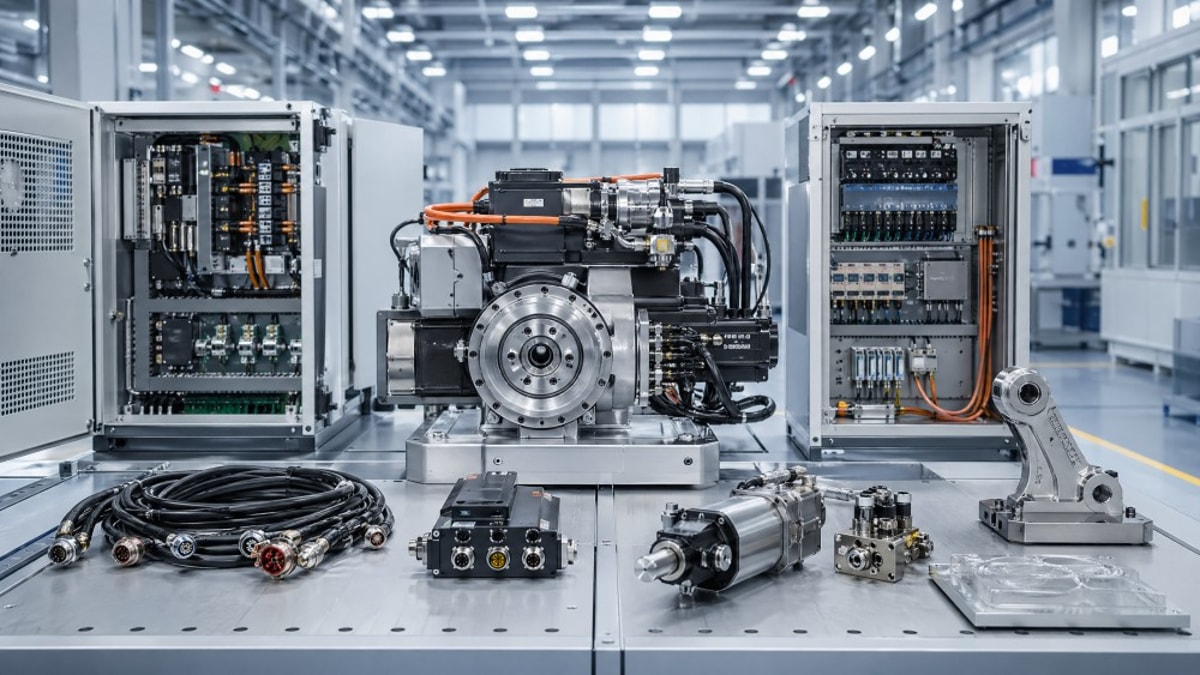
In complex equipment projects, an electromechanical engineers supplier is rarely responsible for a single component alone. The supplier often influences motion systems, control integration, power distribution, thermal management, enclosure compatibility, and on-site commissioning support. When one of these interfaces is misaligned, project teams may face 2–6 weeks of redesign, repeated factory acceptance tests, or delayed site acceptance caused by seemingly small engineering gaps.
For project managers and engineering leads, the real challenge is not simply finding a vendor with production capacity. It is finding a partner that understands system-level constraints: tolerance stack-up, load cycles, duty ratings, cable routing, environmental limits, documentation completeness, and compliance pathways. A weak supplier may quote fast but fail during drawing review, prototype validation, or spare parts planning.
This is where GIFE adds value. Through its Strategic Intelligence Center, GIFE helps manufacturers and project teams interpret market signals and technical decision points at the same time. That combination matters when tariffs shift, low-energy standards tighten, or product platforms must serve multiple regions with different voltage, safety, and labeling expectations.
An effective electromechanical engineers supplier should be assessed not only by unit price, but by 5 core dimensions: engineering depth, manufacturability, compliance readiness, delivery stability, and lifecycle support. If one of these dimensions is weak, the total project cost often rises later through rework, downtime, or fragmented vendor management.
Where complex projects usually fail
- Specifications are written at a high level, while interface details such as connector standards, IP ratings, torque ranges, or thermal envelopes are clarified too late.
- The electromechanical engineers supplier can manufacture parts, but cannot support design for assembly, design for service, or cross-discipline troubleshooting.
- Documentation arrives incomplete, with missing BOM alignment, test records, maintenance guidance, or revision control history.
- Regional compliance issues emerge near shipment, especially for projects that must address CE-related safety expectations, RoHS material considerations, or local electrical installation requirements.
These failure patterns appear across industries, from factory automation and packaging lines to furniture mechanisms, commercial appliances, and special equipment builds. The common lesson is clear: supplier evaluation must start before PO release, not after prototype issues appear.
How to evaluate an electromechanical engineers supplier before procurement
A reliable evaluation process should move beyond generic RFQ comparisons. Project teams usually need a 3-stage review: technical fit, execution fit, and commercial fit. Technical fit verifies whether the electromechanical engineers supplier can meet motion, power, control, durability, and installation requirements. Execution fit checks communication speed, change control, lead time discipline, and test support. Commercial fit confirms pricing logic, tooling assumptions, warranty scope, and long-term parts availability.
This review is particularly important when the equipment includes custom assemblies, low-to-mid production volumes, or region-specific variants. In those cases, the supplier must handle design revisions over a 6–18 month project window without creating confusion across prototypes, pilot batches, and release versions.
The table below helps project leaders compare suppliers using practical engineering criteria rather than sales language alone.
A structured comparison makes hidden risks visible early. If two suppliers offer similar pricing, the better option is usually the one that can explain interface assumptions, testing boundaries, and revision management in concrete terms. That clarity saves time later.
A practical 5-point procurement checklist
- Confirm operating conditions: voltage range, ambient temperature, vibration exposure, ingress requirements, and daily run time.
- Request interface documents: 2D drawings, 3D files if available, connector definitions, mounting positions, and allowable tolerances such as ±0.2 mm or ±0.5 mm where relevant.
- Review validation scope: incoming inspection, functional testing, endurance testing, and pre-shipment verification items.
- Clarify supply terms: prototype lead time, batch lead time, spare parts window, and engineering change notice process.
- Check service alignment: who supports commissioning, remote diagnosis, issue escalation, and replacement planning during the first 12 months.
When project teams follow this checklist, supplier selection becomes more objective and easier to defend internally across engineering, procurement, and operations.
Which technical and compliance factors matter most in complex equipment projects?
Not every project requires the same engineering depth, but most complex equipment programs share a common set of technical review points. The electromechanical engineers supplier should be able to discuss electrical load stability, actuator or motor sizing, thermal rise, wiring protection, controller compatibility, service access, and expected maintenance intervals. These are not minor details; they affect uptime and safety from the first installation onward.
Compliance also deserves early attention. In cross-border projects, teams often need alignment with widely used frameworks such as CE-related expectations for machinery or electrical products, RoHS material restrictions in applicable markets, and documentation suitable for importer, integrator, or end-user review. A supplier does not need to overstate certifications, but it must understand the documentation package needed for the target region.
The next table outlines technical and compliance items that project managers should request before final source approval.
This type of table is especially useful when multiple stakeholders are involved. Engineering can focus on performance, procurement can verify deliverables, and operations can evaluate serviceability without losing alignment.
Why documentation quality matters as much as hardware quality
In many equipment launches, the hardware works but the documentation lags behind. That creates avoidable friction during FAT, shipping release, field installation, and service training. A capable electromechanical engineers supplier should provide revision-controlled drawings, test references, installation guidelines, and a spare parts logic that can support at least the first 12–24 months of operation.
GIFE’s intelligence-driven approach is useful here because technical selection does not happen in isolation. Packaging expectations, environmental rules, product positioning, and regional demand trends can all influence which electromechanical solution is commercially sustainable over time.
Common compliance questions from project teams
- Is the supplier prepared to organize the technical file elements needed by the integrator or importer?
- Can material-related declarations be updated if regulations change during a long project cycle?
- Are packaging, labeling, and transport documents aligned with the destination market and product handling needs?
These questions reduce late surprises, especially when projects run across several countries or use shared product platforms.
How to balance cost, lead time, and lifecycle value
The lowest initial quote does not always deliver the lowest project cost. In complex equipment programs, cost should be reviewed in 4 layers: acquisition price, engineering support cost, commissioning risk, and lifecycle service cost. A lower-priced electromechanical engineers supplier may require extra internal engineering hours, more pilot iterations, or higher spare inventory because reliability is less predictable.
Lead time must also be interpreted carefully. A quoted 3–4 week production window can still become 8–10 weeks if design freeze is unclear, samples are not approved, or imported subcomponents face customs disruption. Project teams should ask for a milestone-based schedule, not a single promised date.
A more resilient sourcing strategy often combines standardization where possible and customization only where it adds measurable value. For example, standard actuators, connectors, or control modules may reduce risk, while custom brackets, enclosures, or interface harnesses preserve product differentiation.
Cost questions worth asking before PO release
- Does the quote include tooling, test fixtures, packaging requirements, and engineering change support, or will these appear later as separate charges?
- What is the minimum economical order quantity for prototypes, pilot runs, and regular production batches?
- Which parts have long replenishment cycles, such as 6–12 weeks, and should be buffered for service continuity?
- If one subcomponent becomes unavailable, is there a validated alternative that preserves fit, function, and compliance?
These questions help project managers move from price comparison to value comparison. That shift is critical when equipment downtime, delayed commissioning, or repeat field visits could outweigh nominal purchasing savings.
When alternatives make sense
Alternative solutions are worth considering when original specifications are over-engineered for the actual use case. A project running one shift, five days per week may not need the same duty margin as an application operating continuously. Likewise, a sealed high-IP configuration may be unnecessary for clean indoor installations. A strong electromechanical engineers supplier will challenge assumptions respectfully and propose fit-for-purpose options.
GIFE supports this decision process by combining technical interpretation with commercial insight. That matters when teams need to judge whether a premium configuration supports market expectations, sustainability goals, or export readiness, rather than simply adding cost.
FAQ and decision guidance for project managers
Many searches for an electromechanical engineers supplier come from project teams under schedule pressure. The most useful answers are practical ones: what to ask, what to verify, and where delays usually start. The questions below reflect common decision points across industrial, commercial, and specialized equipment programs.
How early should we involve an electromechanical engineers supplier?
Ideally during concept validation or early design freeze, not after procurement launch. Bringing the supplier in 8–16 weeks before pilot build allows time for interface review, manufacturability feedback, and prototype correction. Late involvement often shifts engineering issues into the production phase, where they cost more to solve.
What documents should we request first?
Start with the specification sheet, assembly drawings, wiring information, testing outline, and revision history. If the project has regional shipment requirements, add material declarations, labeling expectations, and packaging details. These documents reveal whether the electromechanical engineers supplier can support disciplined execution or only basic supply.
What is a realistic lead time expectation?
For standard or lightly modified assemblies, samples may be available in 2–4 weeks and batch production in 4–8 weeks, depending on component availability. For fully customized systems, the timeline may extend through design review, sample approval, and pilot verification across 8–16 weeks. The safest approach is to separate engineering lead time from production lead time.
What are the most common selection mistakes?
Three errors appear repeatedly: choosing based on price alone, ignoring documentation quality, and assuming compliance can be resolved at the shipping stage. Another common mistake is treating the electromechanical engineers supplier as a parts vendor when the project actually needs engineering collaboration across mechanical, electrical, and service functions.
Why work with GIFE when sourcing and evaluating suppliers
GIFE is positioned for companies that need more than a directory listing or a simple product introduction. Its focus on industrial finishing, auxiliary hardware, and electromechanical essentials gives project teams a broader decision context: not just which supplier can make a part, but which solution supports durability, aesthetics, energy expectations, market access, and commercial positioning at the same time.
Through the Strategic Intelligence Center, GIFE connects sector news, trend analysis, and technical-commercial interpretation. This helps project managers understand 3 practical questions: which supplier capabilities matter most for the project, which compliance or trade changes could affect delivery, and where solution choices can strengthen long-term product value.
If you are comparing an electromechanical engineers supplier for a complex equipment project, GIFE can support the evaluation process with targeted insight around parameter confirmation, solution matching, supplier screening logic, documentation expectations, and risk checkpoints before sourcing moves too far downstream.
What you can discuss with us
- Parameter confirmation for motion, control, power, load, environmental exposure, and maintenance access.
- Product selection guidance for standard versus custom electromechanical assemblies.
- Lead time planning, prototype strategy, and service parts preparation for 6–24 month project windows.
- Compliance and documentation planning for cross-border shipment and multi-market deployment.
- Quote comparison, sample support discussion, and solution refinement based on application constraints.
For project leaders, the goal is simple: reduce engineering uncertainty before it becomes delivery risk. If you need a clearer way to evaluate an electromechanical engineers supplier, align technical requirements, or compare sourcing options for complex equipment, contact GIFE to discuss your application, expected timeline, certification concerns, and customization scope.
Related News
- 00
0000-00
Electromechanical Engineers Consulting for Faster System Integration - 00
0000-00
Sustainable Packaging Solutions: What Works at Scale and What Fails - 00
0000-00
Global Value Chain Management Mistakes That Raise Export Risk - 00
0000-00
Industrial Finishing Technology Trends to Watch in 2026 - 00
0000-00
Industrial Production Efficiency Fixes That Do Not Require New Lines
Weekly Insights
Stay ahead with our curated technology reports delivered every Monday.