





As manufacturers accelerate modernization, electromechanical engineers are becoming the critical link between legacy equipment and smarter, more efficient factory systems. Yet a widening skills gap is slowing upgrades, raising costs, and complicating strategic decisions for business leaders. For enterprises seeking resilient growth, understanding how talent shortages are reshaping automation, maintenance, and capital planning is now essential to staying competitive.
Why are electromechanical engineers now central to factory upgrade decisions?
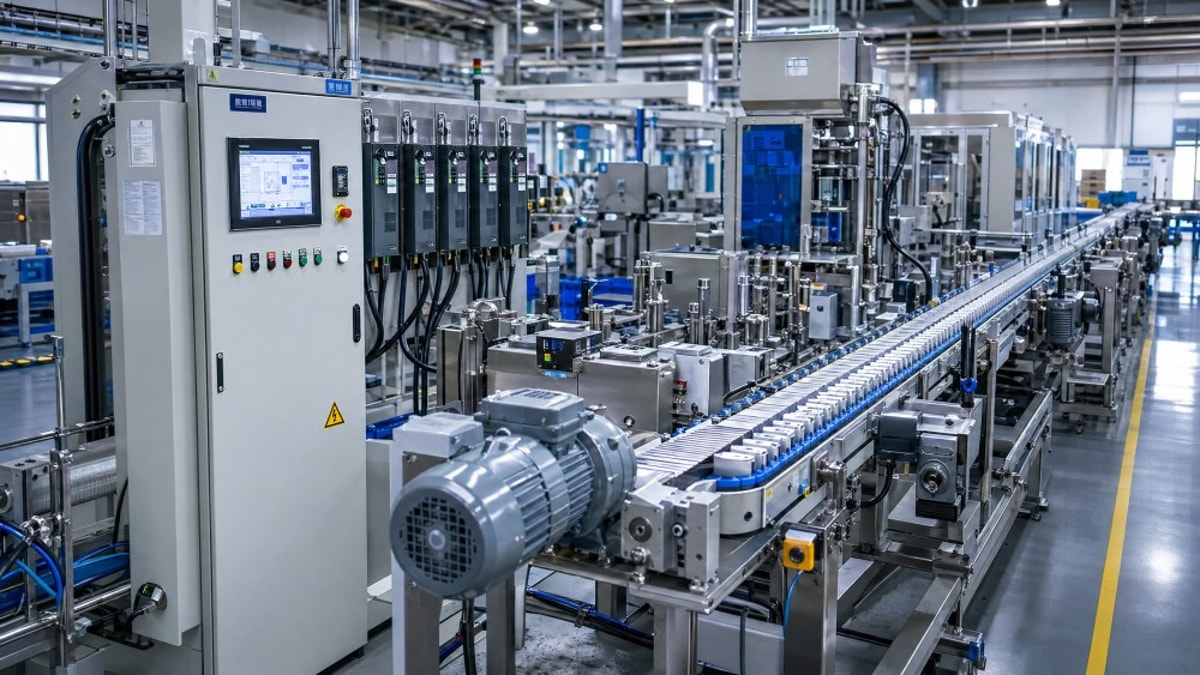
For many industrial companies, modernization no longer starts with buying a new machine. It starts with evaluating whether existing lines can be retrofitted, whether controls can be integrated, and whether maintenance teams can support the transition over the next 12–36 months. That is where electromechanical engineers create value. They connect mechanical reliability, electrical safety, motion control, and practical commissioning into one upgrade path.
In mixed-production environments, the challenge is more complex than pure automation. A factory may operate packaging equipment, conveyor systems, low-voltage drives, pneumatic assemblies, sensors, and finishing-related hardware from different generations. Electromechanical engineers help determine which assets still have 3–5 years of productive life and which ones will become cost traps within the next 2–4 quarters.
Business leaders often see the skills gap only as a hiring problem. In practice, it is a capital allocation problem, a downtime risk, and a supply chain issue at the same time. If qualified electromechanical engineers are not available, enterprises delay retrofits, overspecify replacements, or accept longer startup periods. Each of those decisions raises total project cost, even when the original equipment price looks reasonable.
For companies operating across finishing, auxiliary hardware, furniture, office products, and general industrial essentials, this issue is especially relevant. Product quality at the “final stage” depends on both visible execution and hidden electromechanical stability. GIFE tracks this intersection closely because the commercial impact is not limited to production efficiency; it also affects energy use, defect rates, packaging consistency, and delivery credibility.
What business value do electromechanical engineers protect?
Their value sits in four areas that decision-makers can measure during planning and implementation:
- Asset continuity: they assess whether a retrofit can extend service life by a practical cycle such as 18–36 months instead of forcing immediate replacement.
- Integration quality: they reduce mismatch between PLC logic, motors, sensors, HMIs, and mechanical transmission components during the first commissioning phase.
- Maintenance readiness: they create realistic spare-part, inspection, and fault-response plans that plant teams can execute weekly, monthly, and quarterly.
- Compliance discipline: they help align upgrade decisions with common electrical safety, energy-efficiency, and documentation expectations in international trade and plant audits.
Without that capability, even a promising automation budget can turn into fragmented procurement. The result is often a line that looks modern on paper but remains unstable under real production loads, especially during multi-shift operation or seasonal volume increases.
How is the skills gap reshaping upgrade costs, timelines, and risk?
The skills gap is not simply about fewer candidates in the labor market. It also reflects a mismatch between old equipment knowledge and new digital expectations. Many plants need people who understand motor control, panels, relays, actuators, and mechanical wear patterns, while also being able to work with sensors, communication protocols, and energy-monitoring logic. Those hybrid profiles are difficult to recruit and even harder to retain.
This shortage changes project economics in several ways. Engineering review takes longer, vendor selection becomes narrower, and FAT or SAT preparation may require extra iterations. In practical terms, a retrofit that could be scoped in 2–3 weeks may take 4–6 weeks when internal technical review is weak. Commissioning windows can also stretch from a standard 3–7 days to 2 weeks or more if troubleshooting capability is limited.
The table below shows how the skills gap typically shifts decision outcomes in factory upgrade planning. It is especially useful for enterprise leaders comparing repair, retrofit, and replacement options where electromechanical engineers are a critical bottleneck.
The key lesson is that talent shortages rarely stay inside HR. They cascade into procurement, uptime, and customer service. For export-oriented manufacturers, delayed stabilization after installation can also affect delivery schedules, product appearance consistency, and contract confidence in overseas markets.
Three hidden risks executives often underestimate
The first risk is undocumented legacy complexity. A line may contain modified wiring, non-standard brackets, mixed sensor brands, or obsolete drive interfaces. Without strong electromechanical engineers, these details are discovered during shutdown rather than during planning.
The second risk is weak maintainability. A system can pass startup and still become expensive if routine servicing requires specialist intervention every month. A sound upgrade plan should define at least 5 key maintenance points, a practical spare list, and fault isolation logic plant staff can follow in under 30 minutes.
The third risk is fragmented accountability. When controls, mechanical retrofit parts, electrical cabinets, and finishing-line interfaces come from different suppliers, no one owns line-level performance. Decision-makers need one integrated review framework, not just multiple component quotations.
Which upgrade scenarios need electromechanical engineers the most?
Not every project has the same technical exposure. Some upgrades are low risk, such as replacing standard motors or basic sensors in isolated stations. Others require deeper coordination across mechanical movement, electrical safety, process timing, and output quality. In these cases, electromechanical engineers are not optional; they are the people who prevent small mismatches from becoming expensive downtime.
This is especially true in plants where visible finishing quality depends on hidden process stability. A packaging line, hardware assembly cell, or office-furniture production line may appear straightforward, yet performance can deteriorate quickly when actuators, conveyors, torque settings, and detection logic are not synchronized within acceptable tolerances.
The following comparison helps enterprise buyers identify where the shortage of electromechanical engineers creates the highest exposure during upgrade planning and delivery.
The most exposed scenarios are legacy line automation and cross-system retrofits. These projects usually involve 4–6 linked variables at the same time: torque, speed, sequencing, guarding, cable routing, and inspection logic. A gap in any one of them can undermine throughput or quality consistency.
Application signals that should trigger a deeper technical review
- The line has been modified more than once over the last 5–10 years and documentation is incomplete.
- Production uses multiple SKUs, format changes, or small-batch runs that increase setup sensitivity.
- Downtime costs rise sharply after 2 hours because the line feeds downstream finishing or packaging operations.
- Export delivery or customer audits require stronger evidence of electrical safety, consistency, and maintenance discipline.
When two or more of these conditions apply, leaders should treat engineering capability as a strategic procurement criterion, not a background service. This is where GIFE’s intelligence-led approach becomes valuable: by linking technical feasibility, commercial timing, and broader industrial finishing trends, enterprises can avoid decisions made in isolation.
How should enterprises evaluate suppliers, talent, and implementation plans?
A strong procurement decision in this area is rarely about unit price alone. Decision-makers need a framework that tests whether the supplier, integrator, or partner can compensate for internal capability gaps. That means checking engineering depth, documentation quality, response timing, and post-installation support with the same discipline used for hardware specifications.
When electromechanical engineers are scarce, implementation quality depends on structure. A practical project should move through 4 steps: site audit, solution definition, controlled installation, and verification with operator handover. If any of these steps is vague, the enterprise will likely absorb hidden risk later through unstable output or unplanned stoppages.
The checklist below can help procurement leaders compare vendors, engineering partners, or internal teams before approving factory upgrade budgets.
Five selection criteria that matter more than price
- Compatibility review: ask whether the team can validate motors, drives, sensors, control logic, and mechanical interfaces before shutdown begins.
- Documentation discipline: require wiring updates, parts lists, maintenance notes, and fault-response instructions as deliverables, not optional extras.
- Commissioning support window: clarify whether support is available only on startup day or across the first 7–14 days of real production.
- Spare and replacement strategy: confirm lead times for critical items and whether equivalent parts can be used without creating safety or warranty conflicts.
- Training transfer: ensure operators and maintenance teams receive practical guidance for inspections, resets, and recurring service intervals.
For enterprises with limited in-house engineering depth, this framework improves purchasing accuracy. It also reduces the tendency to overbuy full system replacements when a targeted retrofit would deliver better payback and less disruption.
What role do standards and compliance play?
Even without citing project-specific certification claims, buyers should review common compliance expectations such as low-voltage safety, machine guarding, labeling, electrical documentation, and energy-conscious component selection. In multinational operations, these issues affect acceptance, insurance discussions, maintenance procedures, and customer audits.
For GIFE’s audience, compliance also has a market intelligence dimension. Changes in tariffs, environmental quotas, and energy standards can shift the attractiveness of certain upgrade paths. A lower-energy motor or control strategy may not only reduce operating cost but also strengthen product positioning in markets where sustainability expectations influence commercial access.
A practical implementation rhythm
Most successful upgrade programs follow a structured cycle: 1–2 weeks for audit and scope definition, 2–4 weeks for component confirmation and planning, then a controlled shutdown and startup window based on production realities. That rhythm is more realistic than rushing directly into purchase orders. It gives electromechanical engineers time to reduce uncertainty before capital is locked in.
What should decision-makers expect over the next 12–24 months?
The pressure on electromechanical engineers is unlikely to fade soon. Factories are being asked to improve energy efficiency, automate selectively, reduce waste, and maintain flexible output without replacing every existing asset. That favors retrofit intelligence over simple equipment expansion. Enterprises that can translate technical scarcity into smarter project prioritization will move faster than those waiting for ideal hiring conditions.
A likely trend is the rise of hybrid upgrade models. Instead of one large replacement project, companies will pursue phased modernization in 3 stages: stabilize the current line, digitize the highest-value control points, and replace only the subsystems that repeatedly fail or block growth. This approach is better aligned with tight budgets, uncertain demand cycles, and real-world engineering constraints.
Another trend is tighter integration between mechanical decisions and commercial strategy. For sectors influenced by product finishing, auxiliary hardware, packaging image, and energy credentials, the technical upgrade path increasingly affects market positioning. GIFE’s Strategic Intelligence Center is built around this exact intersection, combining sector news, evolutionary trend analysis, and commercial insight so enterprises can evaluate technical moves in a broader competitive context.
For leadership teams, the most practical response is not to ask only, “Where can we find more electromechanical engineers?” The better question is, “How do we make better upgrade decisions despite a constrained talent market?” That means using external intelligence, stronger selection criteria, realistic implementation phases, and clear maintenance planning from the start.
FAQ for executives planning around the electromechanical engineers shortage
How do we know whether to retrofit or replace a legacy line?
Start with three tests: remaining mechanical life, control-system compatibility, and expected downtime cost. If the line can maintain structural reliability for another 18–36 months and critical interfaces can be modernized without excessive custom work, retrofit often deserves serious consideration. Replacement becomes stronger when failures are frequent across multiple subsystems or when compliance gaps are too broad to close efficiently.
What should we ask a supplier if we lack internal electromechanical engineers?
Ask for scope validation steps, documentation deliverables, startup support duration, spare-part recommendations, and training content. Also ask who owns troubleshooting during the first production week. Those questions reveal whether the supplier is selling components only or can support a stable upgrade outcome.
How long does a typical upgrade decision process take?
For moderate projects, many enterprises need 2–4 weeks for technical assessment and quotation alignment, followed by sourcing and installation planning based on parts lead time and shutdown availability. Complex legacy retrofits can require longer, especially when drawings are incomplete or multiple vendors are involved.
What is the most common mistake in this category?
The most common mistake is evaluating price before evaluating compatibility and maintainability. A lower initial quote can become the highest-cost option if commissioning drags on, if spare parts are poorly defined, or if maintenance staff cannot support the line after handover.
Why work with GIFE when assessing electromechanical engineers, upgrades, and sourcing priorities?
GIFE serves decision-makers who need more than fragmented market information. Our focus on industrial finishing, auxiliary hardware, and commercial essentials allows us to examine the last-mile details that influence production quality and commercial outcomes. That includes the electromechanical core behind efficient lines, energy-conscious upgrades, and reliable final-stage execution.
Through our Strategic Intelligence Center, enterprises can review upgrade choices through several lenses at once: technical feasibility, sourcing risk, trend direction, and global market relevance. This is particularly useful when the shortage of electromechanical engineers makes internal decisions slower or less certain. Instead of reacting to isolated quotations, leaders can build a more defensible roadmap.
You can contact GIFE to discuss practical topics such as retrofit versus replacement judgment, component and system selection, likely delivery cycles, documentation requirements, low-energy upgrade paths, or how global trade and environmental shifts may affect your project timing. We can also help frame evaluation criteria for suppliers, sample support expectations, and quotation communication before capital commitments are made.
If your factory upgrade plan is being constrained by limited electromechanical engineers, unclear selection standards, or pressure to modernize without disrupting output, now is the right time to start a structured conversation. Detail defines quality, and intelligence equips better industrial decisions.
Related News
- 00
0000-00
Electromechanical Engineers Consulting for Faster System Integration - 00
0000-00
Sustainable Packaging Solutions: What Works at Scale and What Fails - 00
0000-00
Global Value Chain Management Mistakes That Raise Export Risk - 00
0000-00
Industrial Finishing Technology Trends to Watch in 2026 - 00
0000-00
Industrial Production Efficiency Fixes That Do Not Require New Lines
Weekly Insights
Stay ahead with our curated technology reports delivered every Monday.