





New technical barriers are slowing customs clearance across key markets, creating costly uncertainty for project managers and engineering leads. From updated compliance rules to stricter documentation and product testing demands, these delays can disrupt delivery schedules, inflate risk, and weaken competitiveness. Understanding where these barriers emerge—and how to respond with smarter planning, sourcing, and cross-border coordination—is now essential for keeping industrial projects on time and on target.
Why Technical Barriers Matter More in Some Project Scenarios Than Others
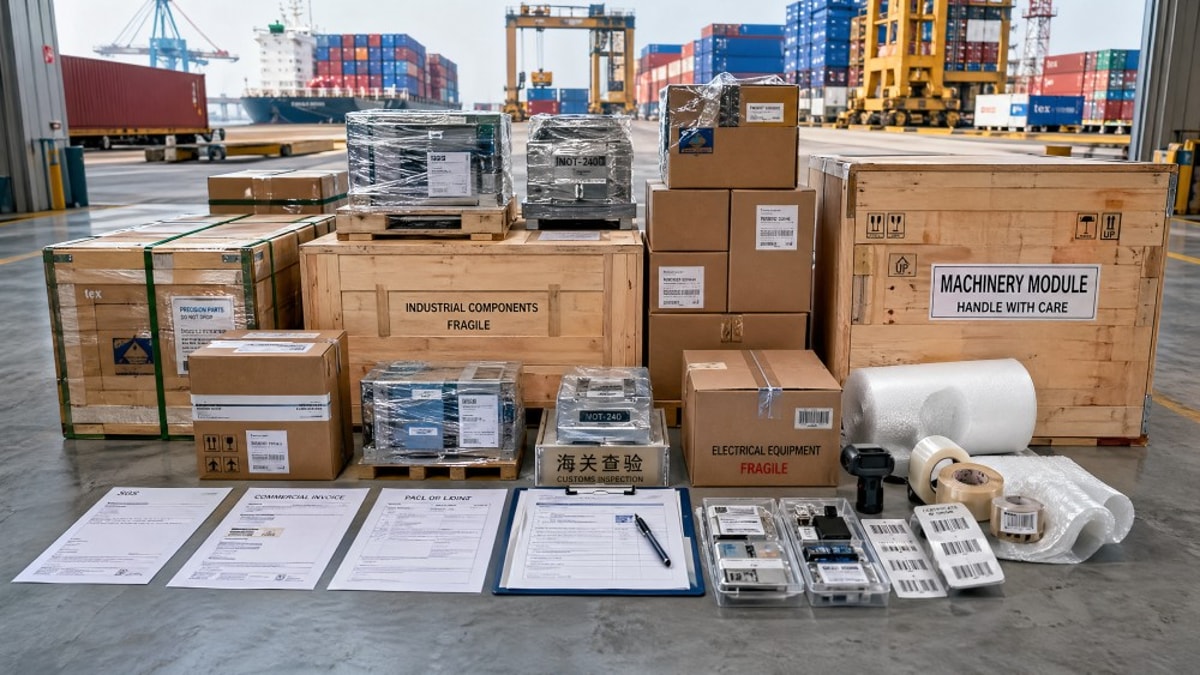
Not every shipment faces the same customs risk. For project managers in industrial finishing, auxiliary hardware, electromechanical assemblies, and commercial essentials, technical barriers often become serious when products combine multiple material types, electrical functions, packaging requirements, or destination-specific labeling rules. A low-volume spare part may pass with limited scrutiny, while a mixed shipment of hardware, coated components, and packaged commercial supplies may trigger document review, product classification checks, and sample testing that add 7 to 21 days to transit time.
The challenge is not only regulatory complexity. It is scenario mismatch. A supplier may assume that prior shipments establish a stable route, yet new technical barriers can appear when a project changes coating chemistry, battery configuration, recycled packaging content, or declared end use. In practical terms, a single engineering revision can create a new customs profile, even if the product family looks similar on paper. That is why scenario-based planning is more useful than broad compliance assumptions.
For teams managing installation deadlines, phased project rollout, or multi-country procurement, the business impact compounds quickly. Delayed customs clearance can affect commissioning windows, labor scheduling, and customer acceptance milestones. A 10-day hold on critical fastening systems or control subassemblies may cost far more than the freight itself, especially when installation crews, downstream packaging, or final assembly lines are already booked within a 2- to 4-week operating window.
Common points where technical barriers emerge
- Product conformity documents do not match the latest destination-market formatting or declaration rules.
- Material composition, coating substances, or electrical specifications require updated testing records.
- HS classification is technically defensible but inconsistent with customs interpretation in a given market.
- Packaging, sustainability claims, or labeling language fall outside current local requirements.
- Mixed consignments combine low-risk and high-risk items, causing the entire shipment to be reviewed.
For GIFE’s audience, this is where strategic intelligence matters. The issue is not simply whether technical barriers exist, but which project scenario is most exposed, how early the risk can be identified, and what operational response reduces disruption without overengineering the supply chain.
Three Typical Scenarios Where Customs Delays Hit Hardest
Project teams usually experience technical barriers in patterns. The following scenarios are especially relevant in comprehensive industrial trade: high-spec electromechanical shipments, finishing-sensitive hardware and accessories, and packaged commercial essentials with sustainability or labeling exposure. Each scenario faces a different customs logic, which means mitigation plans should also differ.
Before comparing them in detail, it helps to map the operational consequences. Some barriers create short administrative delays of 3 to 5 business days. Others trigger lab verification, destination review, or post-entry questioning that can push clearance out by 2 to 6 weeks. Understanding the likely delay type helps managers decide whether to prioritize alternative sourcing, split shipments, or document upgrades first.
The table below compares three common project scenarios and the technical barriers most likely to affect customs clearance.
The key takeaway is that technical barriers do not affect all goods equally. Electromechanical products often face document depth issues, finished hardware often faces interpretation issues, and packaging-led essentials often face claim and labeling issues. Project leaders who identify their scenario early can narrow the control points instead of treating every shipment as a generic customs task.
Scenario 1: Electromechanical shipments under tighter technical review
This scenario is common when projects involve motorized components, controls, connectors, low-voltage subassemblies, or integrated smart hardware. Customs scrutiny tends to rise when products include power input, signal transmission, embedded electronics, or batteries. Even where market-entry certification is handled separately, border officials may still request a clearer technical file, part-function explanation, or declaration consistency across invoice, packing list, and specification sheet.
For engineering leads, the hidden problem is version drift. A specification update made 14 days before shipment may not flow into every document set. If one file lists a lithium-containing accessory and another omits it, technical barriers can escalate quickly. In these cases, the delay is often not caused by product quality, but by mismatch in technical identity across documents.
A practical response is to create a pre-clearance data packet with 5 to 8 fixed fields: product function, power parameters, key material notes, applicable declarations, component origin notes, and package-level itemization. This reduces interpretation gaps and helps brokers defend the shipment more effectively.
What to verify before dispatch
- Whether the final BOM version matches the commercial invoice and packing list.
- Whether any battery, wireless, or control feature changes the declared product nature.
- Whether test summaries and declarations are valid for the exact shipped configuration.
- Whether local import agents need technical sheets in a specific file structure or language format.
Scenario 2: Finished hardware and surface-treated components
This scenario matters for furniture hardware, office fittings, brackets, hinges, handles, rails, and other industrial finishing items where aesthetics and function meet. Customs attention often focuses on coatings, alloys, composite structures, and intended use. A component that appears mechanically simple may still face technical barriers if its finish, substrate, or final application changes tariff interpretation or material disclosure requirements.
Project managers should be especially cautious when sourcing from multiple vendors for one installation package. If one supplier describes an item as decorative hardware and another as structural fitting, customs may question whether the set is classified consistently. This is a common source of 5- to 12-day delays on mixed hardware shipments, especially when product photos and descriptions are too generic.
The best mitigation is not excessive paperwork, but disciplined product naming and composition visibility. For coated hardware, a short technical descriptor covering base material, finish type, and end-use category often prevents unnecessary escalation. This is particularly important for cross-border projects that combine premium appearance standards with strict delivery sequencing.
Scenario 3: Packaging-led commercial essentials and sustainability-sensitive goods
This scenario is expanding as more markets tighten packaging, labeling, and environmental claim expectations. Commercial essentials may include packaged accessories, workplace consumables, retail-support items, and bundled supply kits. Technical barriers here frequently relate less to the item itself and more to the outer packaging, material declarations, recycling language, and product presentation claims.
For companies advancing de-plasticization or eco-material transitions, the customs risk can actually increase during the first 1 to 3 shipping cycles after a packaging change. Why? Because marketing wording, supplier certificates, package marks, and customs declarations may not evolve at the same speed. A well-intended sustainability upgrade can therefore create border friction unless the compliance narrative is synchronized.
Engineering and project teams sometimes underestimate this because they treat packaging as a finishing detail rather than a customs variable. In key markets, however, packaging statements can influence documentation requests, inspection probability, and even whether goods need relabeling prior to release.
How Different Business Needs Change the Right Response
Technical barriers require different responses depending on whether the project is schedule-critical, cost-sensitive, compliance-sensitive, or customization-heavy. A replacement part order for a live facility is not managed the same way as a first-time market entry shipment. The decision framework should reflect the business objective, not just the product type.
For example, a project with a fixed site handover date may accept 3% to 8% higher logistics cost if that reduces customs uncertainty through split shipping, earlier dispatch, or local buffering. A cost-driven replenishment project may instead optimize document standardization and product grouping, accepting a longer base lead time of 25 to 40 days in exchange for fewer premium freight interventions.
The table below shows how common business priorities affect customs strategy when technical barriers are likely.
This comparison shows that technical barriers should be managed as a project planning issue, not only as a trade execution issue. The right response depends on what the shipment is supporting: production continuity, market launch, installation timing, or commercial presentation.
A practical decision model for project managers
A simple way to assess exposure is to score each shipment on four dimensions: technical complexity, document sensitivity, packaging sensitivity, and schedule criticality. If three or more dimensions rate high, the shipment should move into enhanced pre-clearance review at least 10 to 15 days before ETD. This method is especially effective for cross-functional teams where procurement, engineering, and logistics do not share the same risk vocabulary.
At GIFE, this kind of intelligence-led approach is increasingly important because global manufacturers are competing on both technical performance and finishing quality. When customs friction interrupts either one, the downstream cost can reach far beyond freight, affecting project credibility, margin protection, and customer confidence.
Common Misjudgments That Turn Manageable Barriers Into Serious Delays
Many delays linked to technical barriers begin with reasonable but outdated assumptions. Teams assume that because a product shipped successfully six months ago, the same route remains stable. In reality, customs enforcement focus can shift quickly due to policy updates, product safety attention, environmental controls, or local interpretation changes. A previously routine lane can become a review lane with little advance notice.
Another common misjudgment is overreliance on supplier-side documentation without cross-checking project-specific use. A document may be technically valid yet still unfit for a given shipment because the package mix, destination market, or end-use statement differs. For industrial finishing and essential goods, this gap often appears when several product families are bundled under one commercial description.
A third issue is treating customs as the last step rather than an engineering-linked milestone. By the time goods are packed, the chance to solve classification ambiguity, incomplete declarations, or label inconsistencies is much lower. What could have been fixed in 48 hours before booking may take 2 weeks once the shipment is stopped in transit or at destination.
Warning signs that a shipment needs extra review
- The product has been redesigned, recoated, repackaged, or combined with new accessories in the last 90 days.
- The destination market recently increased scrutiny on packaging, low-voltage goods, or material disclosures.
- Different teams use different item names for the same SKU in ERP, quotations, and shipping documents.
- The shipment supports a fixed milestone such as installation, handover, or launch with less than 14 days of float.
- There is no single owner responsible for final document consistency across engineering, sourcing, and logistics.
Recognizing these warning signs early allows managers to re-sequence actions. Sometimes the best move is to ship non-sensitive items first. In other cases, the better answer is to pause dispatch for 3 business days, rebuild the technical file, and avoid a much longer hold later.
Scenario-Based Actions to Reduce Customs Friction
The most effective way to manage technical barriers is to combine product knowledge with scenario-specific process control. This means not only asking whether documents exist, but whether they are suitable for the shipment pattern, market entry route, and project deadline. In practice, strong teams build a repeatable playbook rather than reacting shipment by shipment.
For projects involving electromechanical and finishing-intensive goods, a useful operating rhythm is to review customs exposure at three points: engineering freeze, booking confirmation, and pre-arrival check. These three gates can often prevent 70% of avoidable inconsistencies because they catch specification drift, packing changes, and declaration mismatches before customs does.
Below is a practical action sequence that project managers and engineering leads can apply across most comprehensive industrial trade scenarios.
Recommended action checklist
- Map each shipment by scenario: electromechanical, finishing-sensitive hardware, packaging-sensitive essentials, or mixed load.
- Identify whether the shipment contains any new technical element introduced within the last 30 to 90 days.
- Standardize product descriptions across quotation, PO, invoice, packing list, and specification sheets.
- Confirm destination-market document expectations with broker or importer before final packing, not after dispatch.
- Separate schedule-critical SKUs from lower-risk replenishment goods where customs exposure differs significantly.
- Build a realistic buffer: 5 to 7 days for moderate review risk and 10 to 21 days for high-scrutiny markets or first-time entries.
- Keep a version-controlled technical summary for each product family to reduce repeated explanation effort.
When to consider external intelligence support
If your organization is entering new markets, redesigning eco-packaging, consolidating multiple suppliers, or deploying smart hardware across regions, technical barriers should not be handled only as a documentation problem. This is where market intelligence, product compliance awareness, and commercial interpretation need to work together. A strategic view helps teams see which risks are temporary, which are structural, and which can be reduced through better sourcing architecture.
That perspective aligns with GIFE’s role in industrial finishing, auxiliary hardware, and commercial essentials. The real value lies in connecting detail-level product intelligence with broader market movement, so companies can protect both delivery reliability and premium positioning.
Why Work With Us When Technical Barriers Start Affecting Delivery
When customs clearance slows because of technical barriers, project teams need more than generic trade advice. They need scenario-based guidance that connects engineering detail, packaging logic, sourcing structure, and destination-market expectations. GIFE focuses on exactly this intersection, helping manufacturers and project leaders interpret risks that emerge at the final stage of industrial value delivery.
We support companies that need clearer judgment on product positioning, technical file readiness, hardware and finishing selection, eco-packaging transitions, and cross-border delivery planning. Whether your concern is product selection, lead-time risk, documentation alignment, or market-specific compliance expectations, our intelligence approach is designed to support faster, more informed decisions.
Contact us to discuss your current shipment or project scenario. You can consult us on parameter confirmation, product selection, delivery cycle planning, customized sourcing strategy, certification-related preparation, sample support, or quotation communication. If technical barriers are beginning to delay customs clearance in your target markets, a well-timed review can help you reduce uncertainty before it becomes a project-level disruption.
Related News
- 00
0000-00
Electromechanical Engineers Consulting for Faster System Integration - 00
0000-00
Sustainable Packaging Solutions: What Works at Scale and What Fails - 00
0000-00
Global Value Chain Management Mistakes That Raise Export Risk - 00
0000-00
Industrial Finishing Technology Trends to Watch in 2026 - 00
0000-00
Industrial Production Efficiency Fixes That Do Not Require New Lines
Weekly Insights
Stay ahead with our curated technology reports delivered every Monday.