





Choosing the right industrial finishing solutions requires more than a quick comparison of cost or appearance. For technical evaluators, durability, surface quality, process compatibility, and lifecycle performance all influence long-term value. This guide explains how to assess finishing options with a practical, criteria-based approach, helping you compare coatings and treatments with greater accuracy, lower risk, and stronger confidence in final production decisions.
Why a Checklist-Based Review Works Better for Industrial Finishing Solutions
Technical evaluation often fails when finishing options are compared only by unit price, color card, or supplier claims. In real production, industrial finishing solutions affect corrosion resistance, wear life, assembly fit, packaging appearance, electrical contact behavior, and even downstream warranty exposure. A structured checklist helps evaluators verify what matters first and avoid expensive assumptions.
Across metal parts, plastic housings, furniture hardware, office components, packaging accessories, and electromechanical assemblies, the finishing layer is part of the product system rather than a decorative afterthought. A 10–20 micron coating difference, a curing window of 15–30 minutes, or a surface roughness shift from Ra 0.8 to Ra 1.6 can change adhesion, friction, or visual consistency in ways that become visible only after shipment or field use.
For this reason, technical evaluators need a repeatable method. The most effective approach is to score industrial finishing solutions across a short list of measurable criteria, then add application-specific checks for environment, substrate, compliance, and production rhythm. This reduces subjective debate and gives procurement, engineering, and quality teams a shared language for decision-making.
Start With These Priority Questions
- What is the primary performance goal: corrosion protection, abrasion resistance, appearance consistency, conductivity control, chemical resistance, or touch quality?
- What is the expected service life: 6 months, 3 years, 5 years, or longer under indoor or outdoor exposure?
- Which substrate is involved: steel, aluminum, zinc alloy, stainless steel, engineered plastic, wood composite, or mixed-material assembly?
- Which production limits apply: batch size, line speed, cure temperature, masking complexity, and acceptable rework rate?
When these questions are answered at the beginning, the comparison of industrial finishing solutions becomes faster and more accurate. It also aligns with the intelligence-driven evaluation approach used by GIFE, where finishing performance is assessed not only for immediate visual effect but for its effect on product value, sustainability direction, and global market readiness.
Core Comparison Checklist: What Technical Evaluators Should Measure First
The first comparison stage should focus on six to eight measurable dimensions. This is where many teams save time. Instead of reviewing 20 claims from suppliers, narrow the review to the criteria that most directly affect field performance and production fit. For most industrial finishing solutions, durability and surface quality should carry the highest weighting, often 50%–70% of the decision score.
The table below provides a practical comparison framework. It can be adapted for powder coating, electroplating, anodizing, electrophoretic coating, liquid paint, passivation, conversion coating, PVD, or hybrid finishing systems. The purpose is not to force one universal ranking, but to standardize how each option is reviewed.
This checklist is especially useful when two finishes look similar at incoming inspection but differ sharply after 3–12 months of use. Technical evaluators should also note whether the supplier can maintain the same film behavior across multiple production lots, because consistency is often a stronger predictor of lifecycle value than a single excellent sample.
Checklist for Durability Review
- Confirm the operating environment: indoor dry, coastal humidity, intermittent chemicals, outdoor UV, or high-touch abrasion.
- Request test conditions, not just results. A “passed corrosion test” is not enough without exposure hours, scribe condition, and acceptance criteria.
- Check edge and corner protection. Failure often starts at geometry transitions rather than flat surfaces.
- Review post-processing impact, including assembly torque, stamping, bending, or repeated opening and closing cycles.
Checklist for Surface Quality Review
Surface quality should be judged under controlled inspection conditions. For functional parts, this may mean 300–500 lux and defined viewing distance. For consumer-facing hardware or premium packaging elements, expectations are usually tighter, with stricter control of color drift, gloss variation, and tactile uniformity.
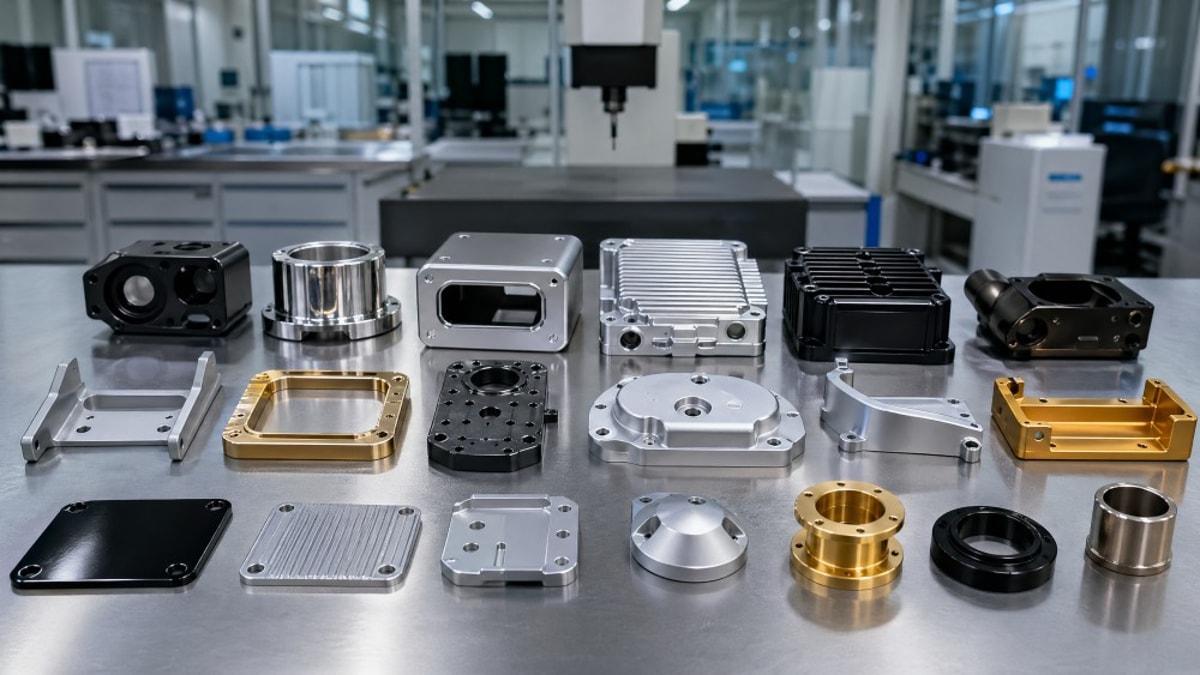
A useful practice is to separate visual defects into critical, major, and minor categories. Pinholes on sealing surfaces, exposed substrate on edges, and severe texture mismatch should not be scored the same way as slight gloss variation on hidden faces. This makes industrial finishing solutions easier to compare fairly across different product classes.
How to Compare Finishes by Process, Substrate, and Production Scenario
Not every finish performs the same way on every substrate. A treatment that works well on aluminum may be unsuitable for zinc alloy. A visually attractive metallic finish may create tolerance problems on threaded parts. That is why industrial finishing solutions should always be compared within the actual production scenario, not in isolation.
In multi-industry applications, technical evaluators commonly review at least three matching layers: substrate condition, pretreatment route, and top finishing process. If one of these layers is unstable, the final result becomes difficult to control. For example, inconsistent surface cleanliness can undermine even a high-grade coating system within one or two production batches.
The table below helps teams compare common finishing routes against application priorities. It is not a fixed rulebook, but a decision aid for early-stage screening and specification review.
A practical interpretation is that there is rarely one best answer across all sectors. The better choice depends on exposure profile, appearance class, geometry complexity, and line economics. Technical evaluators should document why one route is favored, especially when comparing industrial finishing solutions for global sourcing where supplier capability may differ by region.
Scenario-Based Checks
- For outdoor components, prioritize UV stability, corrosion progression, and water ingress points over showroom appearance.
- For furniture and office hardware, include scratch visibility, touch feel, and color consistency across multi-part assemblies.
- For electromechanical assemblies, verify grounding, insulation zones, thread performance, and thermal exposure up to the expected service threshold.
- For premium packaging hardware or decorative accessories, assess fingerprint behavior, edge smoothness, and visual repeatability across batches of 500, 5,000, and 50,000 pieces.
This scenario logic allows industrial finishing solutions to be evaluated in the context of actual use, which is where the most meaningful technical differences appear.
Commonly Missed Risks That Distort Finishing Decisions
Many evaluation problems are not caused by the finish itself, but by overlooked variables around it. Technical teams may approve a finish based on a high-quality sample, then experience field failures because pretreatment, storage, assembly, or transport conditions were not included in the review. These hidden variables should be treated as mandatory check items.
One common risk is over-reliance on visual approval. A bright, uniform sample can still fail in humid storage after 30–60 days if cleaning residues or poor edge coverage are present. Another frequent issue is mismatch between test panels and actual parts. Flat coupons do not always represent recessed cavities, weld seams, or sharp radii that are common in industrial hardware and structural components.
A third risk is underestimating rework impact. Stripping, recoating, repolishing, or touch-up can change final dimensions, gloss, and adhesion. If the acceptable rework rate exceeds 3%–5%, evaluators should review whether the finishing route is truly stable for the intended volume and geometry.
Risk Reminder Checklist
- Do test samples use the same substrate grade, fabrication route, and surface preparation as production parts?
- Are packaging, storage humidity, and transit vibration likely to damage the finish before installation?
- Will assembly operations such as tightening, clipping, or sliding create contact marks after finishing?
- Has the team defined acceptable variation by visible area, hidden area, and functional interface?
- Are environmental or material restrictions relevant, such as heavy-metal limitations or low-emission process targets?
Why these details matter in cross-border sourcing
For global manufacturers, sourcing industrial finishing solutions often involves multiple regions, each with different process maturity, environmental controls, and delivery rhythms. A finish that appears acceptable from one supplier may not scale smoothly when transferred to another line with different pretreatment chemistry, oven profile, or inspection method. Reviewing these variables early reduces qualification delays that can extend by 2–6 weeks.
This is where market-facing intelligence becomes useful. GIFE tracks shifts in finishing-related expectations, from eco-material adoption in furniture and office sectors to the increasing demand for lower-energy electromechanical components and reduced-plastic packaging systems. These trends influence what technical evaluators should include in their finishing checklist today, even if the requirement is not yet mandatory in every destination market.
A Practical Evaluation Workflow for Faster, Safer Selection
Once the comparison criteria are defined, the next step is execution. A practical workflow keeps reviews objective and prevents teams from repeating test cycles. For most industrial finishing solutions, the best process is to move from screening, to sample qualification, to pilot confirmation, and then to controlled production release.
The table below outlines a simple workflow that technical evaluators can use across industries. It supports both new product development and supplier switching projects, especially when durability and surface quality are equally important.
This workflow is effective because it converts industrial finishing solutions from a subjective style decision into a controlled engineering choice. It also helps align supplier communication. Instead of vague requests such as “better durability” or “higher-end finish,” teams can ask for specific evidence tied to exposure hours, thickness ranges, gloss tolerance, cure conditions, or batch consistency.
Information to Prepare Before Contacting a Supplier
- Part material, dimensions, and any critical tolerance zones that cannot accept coating buildup.
- Required visual level, including gloss, texture, color family, and visible surface classification.
- Service environment, including temperature range, humidity, UV, chemical contact, and expected lifecycle.
- Production volume, target lead time, and whether prototype, pilot, or mass production support is needed.
- Any compliance expectations, sample requirements, or destination-market restrictions relevant to the finish.
Preparing these details in advance shortens technical clarification cycles and makes quotations more reliable. In many projects, this can reduce back-and-forth by one to two review rounds and improve the quality of the first sample submission.
Why Choose Us for Industrial Finishing Solutions Intelligence and Selection Support
At GIFE, we approach industrial finishing solutions as a value-defining stage of manufacturing, not just a final visual layer. Our perspective combines finishing performance, auxiliary hardware application, electromechanical practicality, packaging aesthetics, and commercial readiness. That allows technical evaluators to review not only what looks acceptable today, but what remains stable across sourcing, regulation, and product positioning changes.
Through our Strategic Intelligence Center, we help manufacturers and evaluation teams examine the issues that shape better finishing decisions: durability benchmarks, process compatibility, eco-material direction, global market demand, and evolving sector signals. This is especially useful when your project involves multiple finishing routes, premium appearance targets, or a need to balance cost, reliability, and sustainability within one specification.
If you are comparing industrial finishing solutions and need a more structured decision process, contact us to discuss parameter confirmation, finish selection logic, expected lead times, sampling support, specification review, compliance concerns, or quotation communication. We can help you prepare the right evaluation checklist before supplier discussions, clarify which finishing route best fits your product scenario, and support a lower-risk path from technical assessment to final production choice.
Related News
- 00
0000-00
Electromechanical Engineers Consulting for Faster System Integration - 00
0000-00
Sustainable Packaging Solutions: What Works at Scale and What Fails - 00
0000-00
Global Value Chain Management Mistakes That Raise Export Risk - 00
0000-00
Industrial Finishing Technology Trends to Watch in 2026 - 00
0000-00
Industrial Production Efficiency Fixes That Do Not Require New Lines
Weekly Insights
Stay ahead with our curated technology reports delivered every Monday.