





Industrial production optimization is no longer just about cutting costs—it is about reducing waste, protecting output stability, and helping operators make better daily decisions on the line. From material handling and machine efficiency to finishing quality and energy use, the right methods can uncover practical improvements without slowing production. This article explores actionable strategies that support leaner, smarter, and more reliable industrial performance.
For operators, supervisors, and line support teams, the challenge is practical: cut scrap, rework, motion loss, idle time, and energy waste without creating bottlenecks. In most factories, even a 3% to 8% material loss or 10 to 15 minutes of unplanned downtime per shift can erase margin quickly. That is why industrial production optimization must be built around stable routines, measurable checkpoints, and changes that fit real production conditions.
Across finishing, packaging, auxiliary hardware assembly, and electromechanical processes, the best results usually come from small linked improvements rather than one major overhaul. A better feeder setting, a tighter quality window, a faster changeover sequence, or a lower-energy operating range can each deliver gains. For businesses following GIFE intelligence on finishing quality, commercial essentials, and low-energy production, these methods also support stronger product value and more resilient operations.
Start with Waste Mapping at the Operator Level
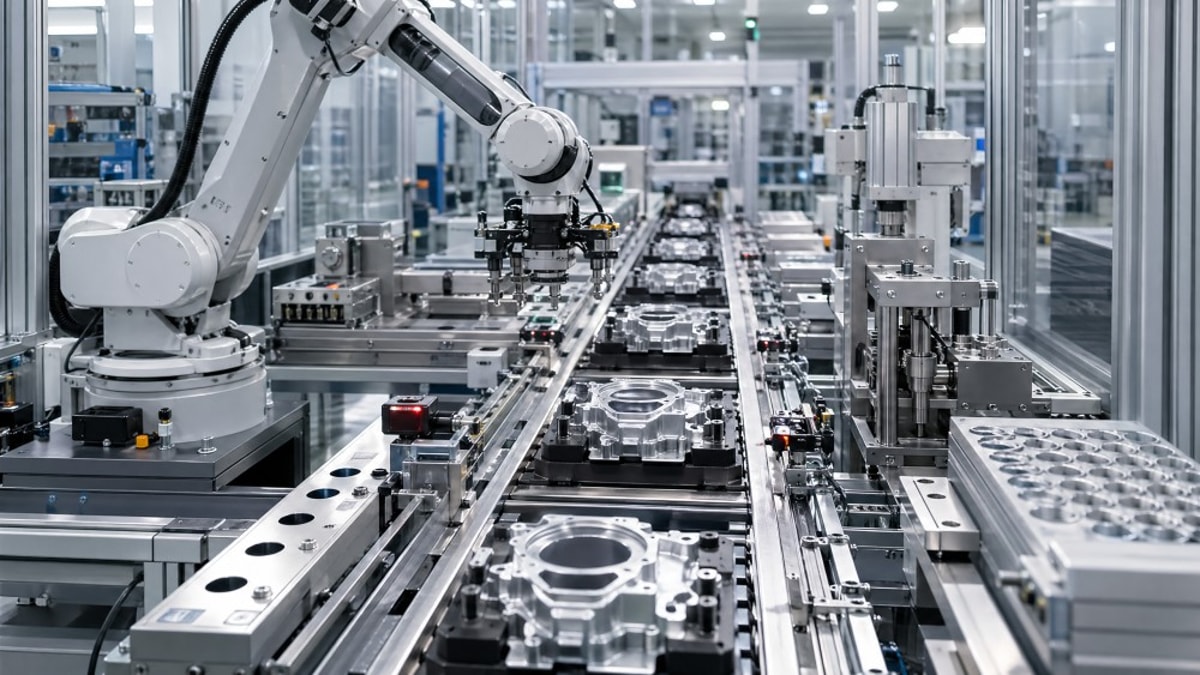
The first step in industrial production optimization is to define where waste actually happens during a shift. Operators often see the losses that dashboards miss: repeated micro-stops, excessive walking, over-handling, poor parts presentation, unstable finishing results, and delayed replenishment. A useful review period is 5 to 10 working days, which is long enough to identify patterns across multiple product runs, shift teams, and machine conditions.
What operators should measure first
Before changing settings or buying equipment, teams should capture a short list of line-level indicators. Focus on metrics that can be checked every 2 hours or at each batch handoff. In many plants, four to six simple measurements reveal more than a large monthly report because they tie directly to action on the shop floor.
- Scrap rate by defect type, such as surface blemish, dimensional error, incomplete assembly, or packaging damage.
- Minor stops per shift, especially events under 5 minutes that are often ignored but frequently repeated.
- Average changeover duration, including tool swap, cleaning, trial pieces, and first-pass approval.
- Material travel distance from storage to line, especially if parts are moved more than 2 times before use.
- Energy draw during idle, warm-up, and peak load periods where unnecessary consumption is common.
Waste mapping should also separate value-adding time from support time. If an operator spends 20% of a shift waiting for parts, labels, instructions, or inspection clearance, the issue is not labor efficiency alone. It signals planning and line-balance problems. This distinction matters because industrial production optimization should remove process friction, not simply pressure operators to move faster.
The table below shows a practical structure for identifying common waste sources and the first corrective action to test. It is designed for cross-industry use, including finishing lines, hardware assembly cells, and packaging operations.
A clear map prevents teams from solving the wrong problem. For example, if defects rise mainly in the first 30 minutes after changeover, the priority is setup control, not faster line speed. When industrial production optimization begins with visible losses and short feedback loops, operators can improve output stability without taking avoidable risks.
Stabilize Machines Before Increasing Speed
Many lines attempt to recover output by raising cycle rate, conveyor speed, or feed pressure. That approach often creates more waste than value when the process window is unstable. In finishing and assembly operations, a machine running 6% slower with consistent quality can outperform a faster line that generates 4% rework and two stop events per hour. Stable output is usually the foundation of real industrial production optimization.
Control the process window
Every machine has a workable operating band. Operators should know the acceptable range for pressure, temperature, feed rate, torque, curing time, or dwell time relevant to their process. A useful method is to define three levels: target, warning, and action limit. If a temperature target is 180°C, for instance, a warning band might be ±5°C and an action limit ±10°C, depending on the material and product sensitivity.
Daily stabilization checklist
A short pre-shift routine can cut avoidable faults significantly. The goal is not more paperwork but faster detection of drift before production starts. For many operations, a 7-minute to 12-minute check is enough to catch loose fixtures, dirty sensors, worn contact surfaces, blocked nozzles, or misaligned guides.
- Confirm critical setpoints against the approved job sheet.
- Inspect wear parts and replace components approaching the end of their service interval.
- Run 3 to 5 sample pieces and compare against visual and dimensional standards.
- Verify response of interlocks, sensors, and reject mechanisms.
- Record any deviation that may affect output during the next 4 to 8 hours.
Micro-downtime deserves special attention because it hides inside “running” time. A line may appear productive while operators continuously clear jams, reset sensors, or adjust parts orientation. If these interruptions occur more than 8 to 10 times per shift, the line needs root-cause control. Frequent causes include inconsistent incoming materials, weak preventive maintenance, and fixtures that no longer hold tolerance.
Another common error is treating all machines the same. A packaging line, polishing station, coating booth, and electromechanical assembly cell do not fail in the same way. Industrial production optimization works better when maintenance frequency, spare part strategy, and operator checks are matched to the process. On critical stations, planned inspection every 40 to 80 operating hours may prevent a larger stoppage later in the week.
Reduce Material and Finishing Loss Without Affecting Throughput
Material waste is often treated as unavoidable, especially where finishing appearance and product protection matter. Yet many losses come from poor dosing, oversized safety margins, damaged work-in-progress, or inconsistent packaging methods. In sectors monitored closely by GIFE, including industrial finishing, hardware integration, and commercial essentials, reducing material loss improves both cost control and delivered product value.
Focus on controllable loss points
Operators should review loss at the exact point where it occurs. Is coating over-applied by 5% to 12% to hide surface variation? Are labels or protective films scrapped because parts arrive with dust or oil? Are cartons oversized, increasing filler use and damage risk in transit? Waste reduction becomes realistic when the source is specific, visible, and linked to a process step rather than assigned to the whole department.
The table below compares several common loss areas and the operational controls that usually deliver quick results. These controls are useful across many production environments and do not depend on a full automation upgrade.
One key lesson is that lower waste does not require lower quality. In fact, better finishing consistency often reduces both scrap and customer complaints. For example, controlled surface preparation, clean handling, and protected part flow can reduce cosmetic defects while preserving line pace. In packaging, right-sized materials support de-plasticization goals and can lower shipping damage if cushioning performance is validated, not guessed.
Operators also need clear rework boundaries. If a part falls outside the approved tolerance or appearance standard, teams should know whether to repair, downgrade, or scrap it within 1 to 3 decision steps. Ambiguity increases queue buildup and hidden cost. Industrial production optimization depends on fast, repeatable decisions, especially in the final stages where value added is already high.
Improve Line Flow, Changeovers, and Operator Decisions
Even when machines are capable and materials are controlled, output suffers if the line flow is uneven. Queues before inspection, delayed replenishment, and long changeovers all create stop-start production. In many plants, one changeover taking 35 minutes instead of 18 minutes can remove the capacity gained by several other improvements. This is why industrial production optimization must include flow design, not only equipment efficiency.
Shorten changeovers with fixed roles
The fastest changeovers are usually not the result of rushing. They come from preparation, fixed tool locations, role assignment, and a standard approval route. A simple method is to split tasks into external work and internal work. External work is completed while the line is still running, such as preparing parts, tools, labels, and job sheets. Internal work begins only after the current run ends.
- Assign 3 clear roles: machine setup, material staging, and first-piece verification.
- Use a pre-changeover checklist with 6 to 8 items instead of relying on memory.
- Store common change parts at point of use, not in a shared distant cabinet.
- Approve the first conforming part within 5 minutes where possible to avoid queue accumulation.
Better decisions during the shift
Operators make dozens of production decisions each day: whether to continue running, call maintenance, adjust settings, isolate material, or stop for quality review. Decision quality improves when the escalation rules are visible. For example, if defect rate exceeds 2% over the last 50 pieces, the operator may pause for inspection; if it exceeds 4%, the supervisor must review before restart. Clear thresholds reduce both overreaction and delayed action.
Visual controls help here. Color-marked replenishment bins, digital counters, hourly output boards, and defect samples at the station all reduce cognitive load. This is especially useful in mixed production environments where several SKUs, finishes, or hardware sets run on the same shift. Industrial production optimization is stronger when the line supports correct choices without requiring constant verbal instruction.
Flow improvement should also include support functions. If quality, maintenance, and material handling respond slowly, operators will compensate with workarounds that eventually raise risk. A practical target is to define response windows such as 10 minutes for line support, 20 minutes for material shortage, and same-shift resolution for recurring micro-faults. These service-level routines protect output without forcing unsafe shortcuts.
Use Energy and Maintenance Data to Protect Output
Energy waste and maintenance losses are often discussed separately, but on the shop floor they are linked. An inefficient motor, clogged filter, worn bearing, or unstable air supply increases consumption while also reducing process consistency. For operators, the key is not advanced analytics alone. It is having a short list of conditions that signal both risk and unnecessary energy use before quality or throughput is affected.
What to watch during normal production
Across many industries, useful warning signs include rising cycle time, higher current draw, abnormal vibration, pressure drop, and longer warm-up periods. A machine that needs 15 minutes to stabilize instead of its normal 8 minutes is sending a message. So is a compressed air line with repeated pressure dips below the required band. These changes may look small, but they often lead to scrap, waiting time, and avoidable energy cost.
The table below outlines a practical monitoring approach that operators and maintenance teams can use together. It supports industrial production optimization by focusing on early signals, not only major failures.
Related News
- 00
0000-00
Electromechanical Engineers Consulting for Faster System Integration - 00
0000-00
Sustainable Packaging Solutions: What Works at Scale and What Fails - 00
0000-00
Global Value Chain Management Mistakes That Raise Export Risk - 00
0000-00
Industrial Finishing Technology Trends to Watch in 2026 - 00
0000-00
Industrial Production Efficiency Fixes That Do Not Require New Lines
Weekly Insights
Stay ahead with our curated technology reports delivered every Monday.