





A motor trips again after replacement, a pump develops the same vibration after a bearing change, or a control fault disappears during service and returns under production load. These repeat calls suggest that the repair may have addressed a damaged component without identifying what damaged it. Bring in electromechanical engineering experts when a verified routine repair fails to prevent recurrence, the fault crosses electrical and mechanical systems, or safe diagnosis exceeds the available skills and instruments.
Do not wait for another failure when there is evidence of electrical overheating, unexpected movement, compromised protective functions, or rapidly worsening mechanical damage. For less urgent faults, the decision should depend on the quality of the previous investigation, the operating conditions that trigger the problem, and the consequences of another breakdown—not simply how many parts have been replaced.
Separate an unfinished repair from a deeper engineering problem
A returning symptom does not automatically mean the equipment needs redesign. A loose connection, incorrect replacement part, blocked cooling passage, or incomplete alignment procedure can make an otherwise straightforward repair fail. Before escalating, confirm that the original work followed the equipment documentation and that the replacement matches the required electrical, mechanical, and environmental specifications.
Review whether the equipment was tested under the conditions that originally caused the failure. A motor that runs normally without load has not demonstrated reliable operation with the driven machine connected. A pump tested briefly with cool fluid has not reproduced a fault that occurs after sustained operation. An intermittent sensor may behave correctly while stationary but lose its signal when the cable moves.
The distinction is practical: routine maintenance corrects known defects using established procedures. Engineering investigation becomes necessary when the cause remains uncertain, several explanations fit the evidence, or the remedy requires assessing interactions between the drive, controls, mechanical load, and process.
Escalation signals that justify specialist involvement
There is no universal number of repeat failures that makes escalation mandatory. One recurrence after a properly verified repair can justify support, especially where downtime or damage has serious consequences. The following patterns are more useful than a fixed service-call count.
Another strong signal is disagreement between observations. For example, an overload alarm may suggest excessive torque while operators report reduced output. That combination can point toward slipping transmission components, process restrictions, or misleading feedback rather than a simple motor defect. Specialists can determine which measurements will distinguish these possibilities.
Stop repeated resetting when protection trips without an understood cause. Raising overload settings, extending fault delays, or bypassing interlocks to keep production running can conceal the evidence and increase risk. Any protective-setting change needs a documented technical basis and authorization under the applicable site procedures.
Use the operating pattern to narrow the investigation
Trips during starting, acceleration, or load changes
Record the exact stage at which the trip occurs: before shaft movement, during acceleration, at steady speed, or when a valve or process load changes. These distinctions help separate starting problems, drive configuration issues, mechanical binding, and excessive process demand.
Preserve the drive fault history and relevant parameter settings before making changes. A displayed fault code identifies the condition detected by the controller, not necessarily the initiating cause. Supply voltage, current, speed, torque estimates, and process signals may need synchronized recording to establish the sequence. Equipment-specific interpretation matters, particularly when measurements involve variable-frequency-drive outputs.
Overheating or vibration that develops after warm-up
Temperature-dependent failures often escape short service tests. Record operating duration, ambient conditions, load, cooling status, and the location of heating. Distinguish motor-frame temperature from bearing-housing temperature and compare observations with manufacturer guidance rather than treating all hot surfaces as equivalent.
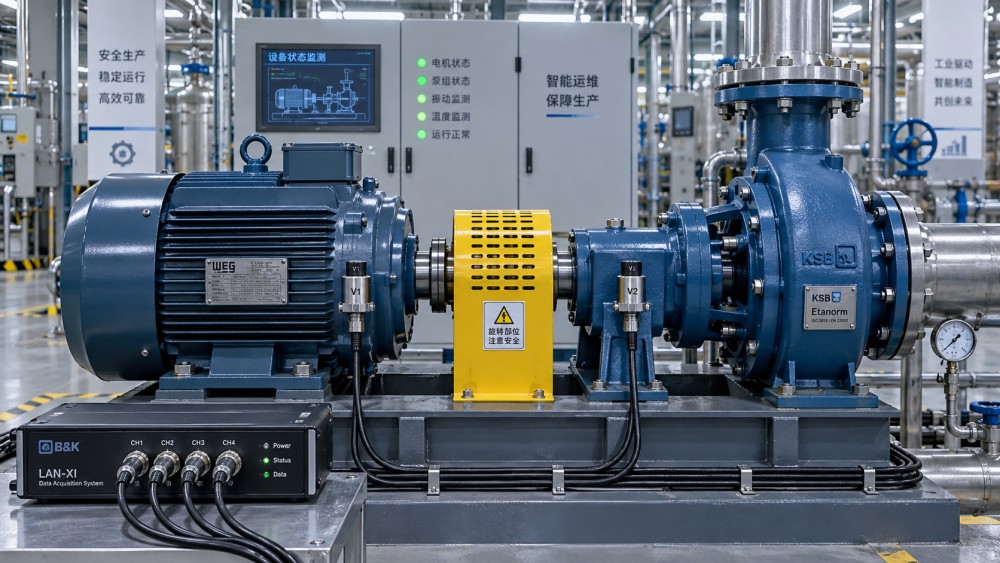
Vibration that rises after warm-up may involve thermal expansion, changing alignment, lubricant behavior, or a speed-dependent resonance. A vibration reading alone is rarely enough. Measurement location, direction, operating speed, and load must accompany it. Engineering support is useful when the team needs frequency analysis, phase measurements, or an assessment of the base and connected equipment.
Intermittent control faults with no obvious damaged part
Separate the commanded action from the actual response. Did the controller issue a start command? Did the drive accept it? Did the motor rotate? Did the position or speed feedback report that movement correctly? This sequence prevents a feedback problem from being mistaken for an actuator failure.
Check whether the fault follows cabinet temperature, machine movement, nearby switching, or a particular production recipe. Screenshots taken after a reset may miss the decisive event; timestamped alarm records and authorized data captures are more useful. Recurring faults involving communication, signal integrity, and mechanical motion often require coordinated controls and mechanical expertise.
Prepare evidence before the specialist visit
A useful escalation package lets the engineer begin with competing explanations rather than repeat the entire service history. Keep observations separate from assumptions. “Current increased before the trip” is evidence; “the motor is undersized” is a hypothesis until the application has been assessed.
- Equipment identity: Model details, motor and drive ratings, pump configuration, transmission arrangement, and relevant drawings.
- Failure chronology: First occurrence, subsequent recurrences, operating conditions, repairs made, and how long each repair remained effective.
- Operating context: Speed, load, duty cycle, starts and stops, fluid conditions where relevant, and changes in production demand.
- Diagnostic records: Original fault codes, timestamped logs, measurements with units, instrument details, and measurement locations.
- Change history: Software revisions, drive parameters, replacement specifications, wiring alterations, piping changes, and mechanical modifications.
- Physical evidence: Photographs, inspection notes, and retained failed components where safe and practical.
Include what did not reproduce the fault. A machine that passes a no-load test but fails during a particular operating cycle provides a useful boundary. Also document whether measurements were taken cold, hot, running, or stopped; otherwise, apparently conflicting readings may simply describe different conditions.
Do not dismantle every failed component before deciding whether specialist inspection is needed. Bearing surfaces, coupling wear, terminal discoloration, and seal damage can help distinguish causes. Preserve evidence without delaying necessary isolation or other immediate safety measures.
Set a safe boundary around maintenance-led checks
Routine checks can continue when they are covered by approved procedures and performed by personnel qualified for the task. Reviewing logs, verifying part specifications, inspecting accessible cooling paths, and checking documented maintenance requirements can eliminate avoidable errors before engineering work begins.
Hands-on inspection requires appropriate isolation, lockout/tagout, and control of stored energy. Pumps and actuators may retain pressure; rotating assemblies may move after electrical power is removed. Do not assume that disconnecting the supply makes every part of the machine safe.
Energized electrical testing, insulation testing, drive-output measurement, and dynamic mechanical testing need suitable competence, instruments, and risk controls. Insulation tests can damage connected electronics if performed incorrectly. A test requiring removed guards, defeated interlocks, or exposure to live conductors is not an informal troubleshooting step.
Where operation remains permitted, agree on stop criteria with the responsible site personnel. Those criteria should reflect manufacturer limits and the equipment risk assessment, covering relevant conditions such as abnormal temperature, vibration, leakage, unstable motion, or further protective trips. Do not invent generic limits for equipment with different designs and duties.
Choose expertise that matches the fault
The right specialist is not necessarily someone who can replace more components. Look for experience with the equipment architecture and the suspected failure mechanism. A controls engineer may be essential for intermittent sequencing problems, while recurring pump damage may require rotating-equipment expertise with hydraulic knowledge.
Ask how the investigation will connect electrical measurements with mechanical and process conditions. For mixed-system faults, separate reports that never share timestamps or operating states can leave the central question unanswered. One coordinated diagnostic plan is more useful than several disconnected inspections.
Agree on the scope before testing begins: the question to be answered, evidence already available, permitted operating conditions, required shutdown access, and expected deliverables. Request findings that distinguish confirmed causes from plausible contributors and unresolved uncertainties. A recommendation to replace a component should explain why it failed and what prevents the replacement from suffering the same damage.
Make repair acceptance reflect the original failure conditions
A repair is not fully validated because the alarm cleared or the machine completed a brief run. Define acceptance conditions before implementing the corrective action. They should reflect the circumstances of recurrence: representative load, relevant speed range, warm-up, repeated starts, or the production sequence associated with the fault.
- Confirm the mechanism. Link the proposed cause to measured behavior or physical evidence, and identify any competing explanations still open.
- Document the correction. Record parts, settings, alignment results, wiring changes, or process adjustments so later teams can reconstruct the equipment state.
- Test the relevant conditions. Use an authorized test plan that exercises the known trigger without exceeding safe operating boundaries.
- Monitor for recurrence. Select indicators associated with the failure mechanism and review them over a representative operating period.
Monitoring should capture leading indicators, not only shutdown alarms. Bearing temperature and vibration may be more informative than a simple running status; drive event records may reveal disturbances before a trip. Choose indicators supported by the diagnosis rather than collecting data without a defined purpose.
Close the service issue when the corrective action has passed the agreed acceptance conditions and remaining uncertainty is documented. Where specialist analysis identifies an application mismatch—such as unsuitable duty, inadequate cooling, or operation outside the pump’s intended range—the lasting remedy may require changing the operating arrangement rather than replacing the failed part again.
Related News
- 00
0000-00
How to compare equipment performance under matching test conditions - 00
0000-00
140th Canton Fair Phase One Closes with Record Overseas Buyer Attendance - 00
0000-00
How to prevent delamination in laminated flexible packaging films - 00
0000-00
Fujifilm and ePac Partner Globally on Jet Press FP790 Deployment - 00
0000-00
Choosing technical ceramics for wear resistance under impact loads
Weekly Insights
Stay ahead with our curated technology reports delivered every Monday.