





When should a product design be revised before tooling? Revise it when unresolved requirements, manufacturing limitations, or validation failures could become expensive production problems later.
For manufacturers, product managers, and sourcing teams, the practical question is whether the current design can deliver reliable performance at an acceptable production cost consistently.
Before committing to molds, dies, or fixtures, review material performance, achievable tolerances, assembly access, supplier capabilities, and any requirements that still depend on untested assumptions.
Across furniture hardware, electromechanical components, packaging, and other industrial products, this review helps distinguish necessary design changes from improvements that can wait until later releases.
Which Problems Should Stop Tooling Approval?
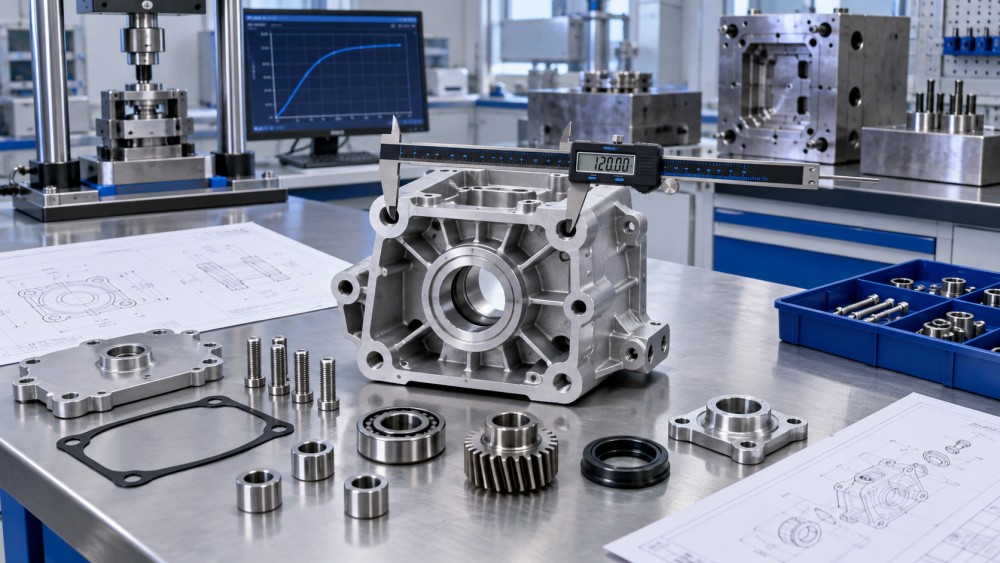
A design revision is necessary when evidence shows that the product cannot reliably meet a critical requirement, or manufacturing feasibility remains uncertain before tooling approval.
Typical stopping points include failed load tests, unresolved sealing problems, inaccessible assembly features, missing safety requirements, and dimensions that suppliers cannot consistently produce in volume.
Separate these issues from preferences such as optional styling changes. A cosmetic improvement rarely justifies delaying tooling unless appearance directly affects acceptance or customer requirements.
Use three questions to evaluate each concern: What could fail? How serious would that failure be? What evidence shows the risk is controlled before release?
A cabinet hinge that binds under expected loading needs investigation and potentially revised geometry. An optional decorative texture may remain a later enhancement without delaying tooling.
Sometimes the correct action is further testing rather than redesign. Missing evidence does not prove the design is wrong, but it can block tooling approval.
Also distinguish product changes from tooling changes. A different gate location, fixture strategy, or mold insert may resolve manufacturability without altering the finished product specification.
Assign every unresolved issue an owner, closure criterion, and decision date. Tooling should proceed only when critical risks are resolved or explicitly accepted with justification.
Are Materials and Performance Requirements Actually Verified?
Material uncertainty is a strong reason to pause tooling because shrinkage, stiffness, creep, chemical compatibility, and surface behavior can all influence final geometry and performance.
A prototype printed in one polymer does not establish how an injection-molded part made from another grade will behave under repeated loading or elevated temperatures.
For furniture fittings, check sustained loads and repeated operation. For pump components, examine fluid exposure, operating temperature, dimensional stability, and any required sealing performance specifications.
For packaging closures, evaluate opening force, sealing integrity, and compatibility with the contents. Material selection should follow actual service conditions rather than an attractive datasheet.
Revise the design when testing reveals cracking, excessive deformation, loss of fit, or deterioration under expected use. Determine whether material, geometry, or both need changing.
Specify the intended material grade and relevant conditioning requirements before final approval. Broad descriptions such as “nylon” or “steel” leave important engineering decisions unresolved unnecessarily.
Include coatings, adhesives, and finishing processes in the review. Their thickness, curing conditions, or surface preparation requirements can affect dimensions, bonding, appearance, and assembly behavior.
If the selected material changes, revisit dimensions and validation. Substituting a resin or alloy after approval may invalidate assumptions about shrinkage, forming behavior, and durability.
Does the Geometry Match the Intended Manufacturing Process?
Design for manufacturability, or DFM, should examine the proposed production process and supplier equipment. Generic design rules cannot establish whether a specific component is toolable.
Injection-molded parts need suitable draft, manageable wall transitions, accessible release geometry, and a workable filling strategy. Thick sections may require redesign to control sink marks.
Undercuts can require slides, lifters, or separate components. Keep them when they provide necessary function, but understand their effects on tooling cost, maintenance, and reliability.
Stamped and formed metal parts need review for bend radii, hole placement, springback, and forming sequence. Features that look straightforward in CAD may create production difficulties.
For molded ceramic products, drying and firing shrinkage can affect fit and repeatability. Tooling dimensions should reflect validated process behavior and intended finishing requirements adequately.
Reconsider geometry when production requires fragile tool features, difficult ejection, excessive machining, or avoidable secondary operations. These conditions can increase scrap and maintenance throughout production.
Request specific supplier feedback: identify the affected feature, explain the manufacturing concern, and propose an alternative. “This is difficult” provides too little information for decisions.
Review proposed changes against functional requirements before accepting them. Simplifying a mold must not weaken a mounting point, compromise sealing, or reduce required adjustment range.
Will Tolerances and Assembly Work Under Normal Variation?
A product may function perfectly as a carefully adjusted prototype yet fail when production variation accumulates across mating parts, coatings, fasteners, and purchased components together.
Review tolerance stacks wherever dimensions affect fit, clearance, alignment, sealing, or motion. Focus first on functional interfaces rather than tightening every dimension on the drawing.
For example, a drawer slide assembly may bind if mounting positions, rail straightness, and cabinet dimensions combine unfavorably, even when individual parts satisfy their drawings.
Revise dimensions or interfaces when the allowable variation is narrower than the proposed process can reliably maintain. Consider added clearance, locating features, or adjustable connections.
Do not assume tighter tolerances are always the answer. They can increase inspection, sorting, machining, and rejection costs without addressing the underlying sensitivity of the design.
Assembly review should cover tool access, insertion direction, fastener engagement, adhesive application, and inspection visibility. Check whether operators can complete each step consistently and safely.
Build representative assemblies with realistic variation where possible. Deliberately test difficult combinations rather than relying only on nominal dimensions or a single successful build sample.
If acceptable performance depends on manual trimming, selective matching, or repeated adjustment, decide whether those operations are intentional production steps or evidence that redesign is needed.
Can the Selected Supplier Produce It at the Required Cost?
A feasible design is not automatically feasible at every factory. Equipment, process control, tooling experience, inspection methods, and finishing capabilities differ significantly among potential suppliers.
Before approval, obtain a manufacturing review from the supplier expected to build the tool and produce parts. Involve secondary suppliers when their processes affect interfaces.
Clarify responsibility for tooling design, dimensional corrections, material sourcing, trial production, and acceptance testing. Unclear responsibilities often turn manageable technical issues into schedule and cost disputes.
Ask whether the quoted cost includes secondary operations, assembly, inspection, expected scrap, maintenance, and packaging. A low unit quote can conceal an expensive production route.
Design revision becomes appropriate when unnecessary complexity drives recurring costs above the business target, particularly at forecast volumes where small unit savings become commercially significant.
Compare alternatives using total expected cost: tooling, validation, unit production, quality losses, maintenance, and changeover. Include the value of any launch delay caused by redesign.
A simplified bracket may cost less to stamp but require additional assembly labor. Evaluate the complete product economics before selecting the apparently cheaper component option.
For uncertain demand, consider staged investment or adaptable tooling where practical. Confirm which features remain changeable, because tool modification flexibility depends on geometry and construction.
What Evidence Is Enough Before Committing to Tooling?
Pre-tooling validation should target the assumptions most likely to cause failure or expensive corrections. The required evidence depends on product complexity, failure consequences, and process uncertainty.
Start with a requirement checklist covering intended use, loads, environment, interfaces, appearance, service life, and applicable regulatory obligations. Define measurable acceptance criteria for critical requirements.
Use prototypes to answer specific questions. A printed housing can confirm access and packaging, while a machined sample may better support certain dimensional or structural checks.
Record prototype limitations alongside results. Different materials, surface finishes, and fabrication methods can make a successful prototype unrepresentative of the eventual production part in service.
Test the weakest credible conditions, including temperature extremes, repeated operation, or unfavorable dimensional combinations when relevant. Typical conditions alone may leave important failure modes undiscovered.
Some characteristics require samples from production tooling, including process-dependent warpage or actual molded surface quality. Establish trial acceptance criteria and allow time for necessary corrections.
Before that commitment, close risks that can reasonably be resolved through analysis, representative prototypes, supplier reviews, or interface testing. Document what remains uncertain and why.
A formal gate review should connect each critical requirement to evidence, an accepted residual risk, or a planned production-tool trial with clearly assigned corrective responsibility.
How Should Teams Decide Whether a Revision Is Worth the Delay?
Compare the cost and delay of changing the design now with the expected consequences of leaving the issue unresolved, including tool correction and production disruption.
A useful estimate combines the likelihood of failure with its financial impact. Add potential warranty costs, shipment delays, inventory exposure, and customer consequences where relevant.
Avoid false precision when information is limited. Compare plausible scenarios and identify which assumptions change the decision, rather than treating an uncertain estimate as fact.
Critical safety or mandatory compliance gaps should block release regardless of an attractive cost calculation. Financial comparisons help prioritize acceptable options after those requirements are satisfied.
Revise before tooling when a modest design change removes a credible major failure, substantially improves process capability, or eliminates recurring costs that exceed the revision investment.
Proceed when evidence supports critical performance and manufacturing requirements, remaining risks are acceptable, and proposed improvements offer limited value compared with their cost and delay.
At release, freeze the approved drawings, material specifications, interface dimensions, and acceptance criteria under revision control. Ensure the supplier receives the same approved documentation package.
Any subsequent change should trigger an impact review covering tooling, purchasing, validation, assembly, and schedule. Even a small dimensional adjustment can affect several connected parts.
Approve Tooling When the Important Questions Have Evidence
A product design should be revised before tooling when unresolved risks threaten required performance, manufacturability, assembly, compliance, or commercial viability under the intended production conditions.
The goal is a justified decision supported by evidence. Resolve critical issues, understand process limitations, and make remaining uncertainty visible before committing to tooling investment.
For manufacturers and sourcing teams, the strongest approval package combines validated requirements, supplier DFM feedback, realistic cost assumptions, controlled specifications, and an agreed tooling acceptance plan.
When those elements align, tooling becomes a defensible next step. When they do not, targeted revision or further validation can prevent avoidable production costs later.